01Rome's oldest French city holds its past in plain sight — if you know where to look
02Gateway to Gaul
In 118 BC, nearly two decades before Julius Caesar was born, Roman settlers established Narbo Martius on the banks of the River Aude. It was Rome's first colony in Gaul — not a garrison but a proper civilian settlement, planned and planted by the republic as a commercial bridgehead into a continent it was only beginning to understand. The Via Domitia, the great road linking Italy to Spain, ran directly through it. So did ambition. Within a generation, Narbo Martius had become the capital of the province of Gallia Narbonensis, larger and more important than Massalia (modern Marseille), which had been a Greek trading post for four centuries already. At its height, Narbonne was among the wealthiest cities in the western empire.
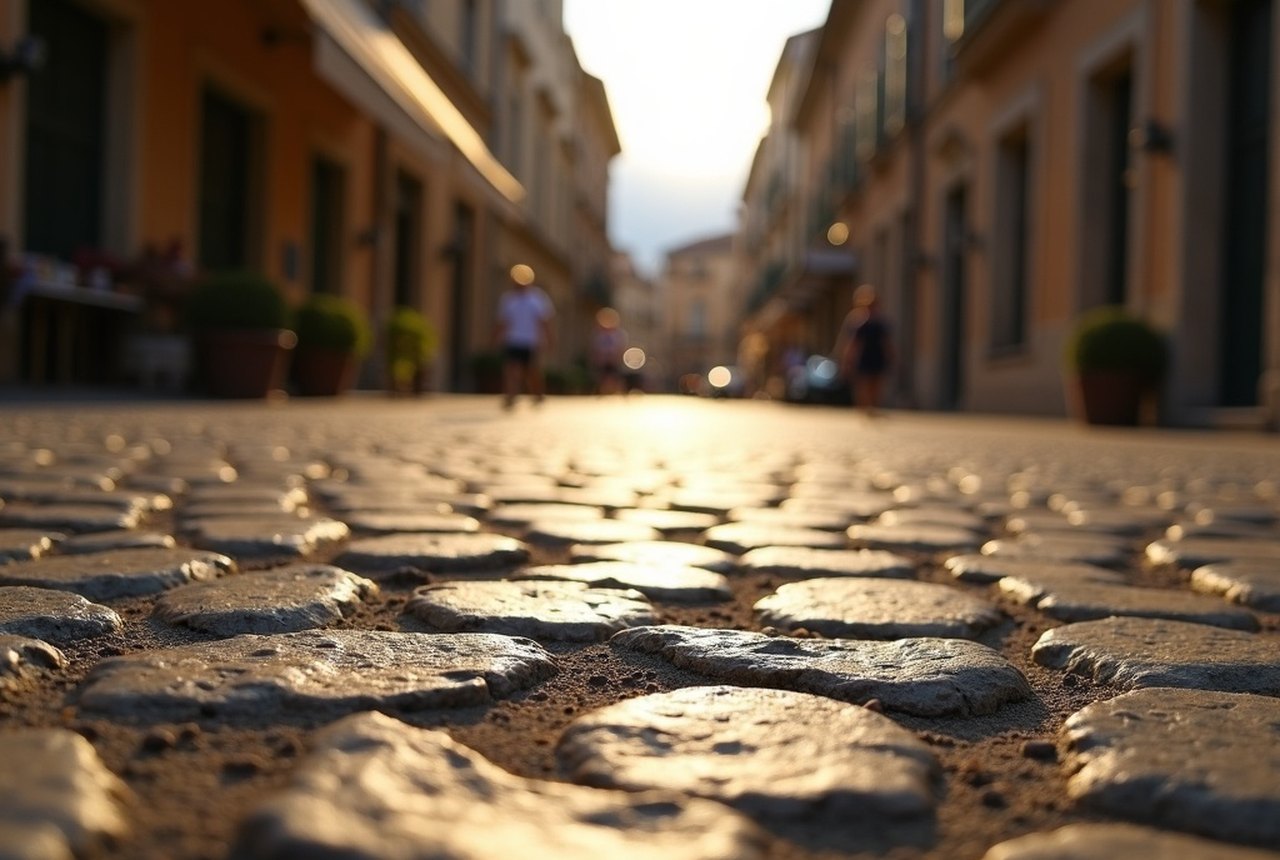
The Romans left no single showpiece monument here — no amphitheatre still crowning a hill, no aqueduct spanning a gorge. What they left is subtler and, in its own way, more extraordinary: the stones of the Via Domitia still lie exposed in the middle of the Place de l'Hôtel de Ville, as if the modern city simply forgot to cover them. Ruts worn by Roman wagon wheels are still legible in the basalt. Stand on them on a busy market morning and the eighteen centuries between you and a Roman carter seem to thin almost to nothing.
Beneath the square, the Horreum makes that collapse of time still more vertiginous. This subterranean complex of vaulted stone corridors — a storage warehouse, most likely, for goods flowing through one of the busiest ports on the western Mediterranean — dates from the late first century BC. Its scale is remarkable: gallery after gallery of neatly fitted Roman masonry, cool and dimly lit, smelling of cut stone. Amphorae, marble fragments, inscriptions and commercial weights recovered here are displayed alongside the structure itself, and together they make the Horreum the most immersive Roman interior in the whole of Languedoc.
03An Ambition Arrested in Stone
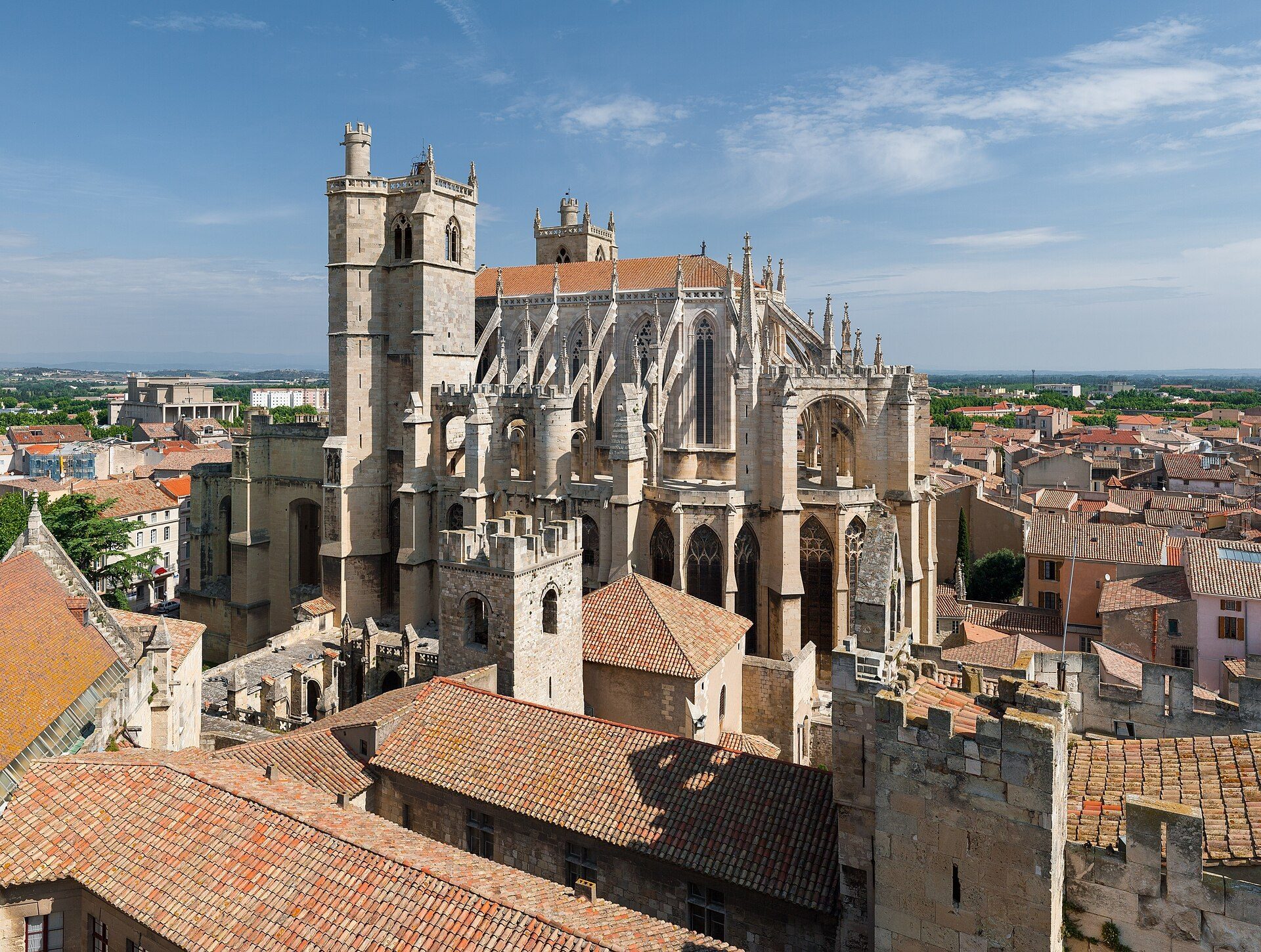
Christianity arrived early in Narbonne, and the city's archbishops accumulated formidable power through the early medieval centuries, channelling both spiritual authority and considerable wealth. The decision in 1272 to build a cathedral worthy of that status produced one of the great unfinished monuments of Gothic France. The Cathédrale Saint-Just-et-Saint-Pasteur was conceived on the grandest scale; its choir, completed by the early fourteenth century, soars to nearly forty metres — taller than the nave of Notre-Dame de Paris and comparable to the great choirs of northern France. Then construction stopped.
The reason was prosaic and political: to extend the nave westward, the city's Roman walls would have had to be demolished. The consuls of Narbonne refused. City and cathedral negotiated, argued and eventually abandoned the project, leaving the church permanently truncated — choir, apse and transept without a nave, braced instead against the adjoining Archbishops' Palace. Walk around it and the stub of the intended nave, never built, remains legible as a kind of architectural ghost. Inside, the vertical drama of the choir is undiminished. The stained glass, treasury and Flemish tapestries reward close attention.
The Palais des Archevêques, which flanks the cathedral and opens onto the central square, is itself a layered accumulation of centuries — Romanesque tower, Gothic hall, later Renaissance additions, and eventually a wing remodelled in the nineteenth century by Viollet-le-Duc, who left his confident, sometimes heavy hand across the battlements. The complex today houses the town hall, a fine arts museum and an archaeology museum that holds much of what the Roman city has yielded.
04A Port That Disappeared
Narbonne's long decline is inseparable from its geography. The city had grown rich because the Aude connected it to a coastal lagoon system that opened onto the Mediterranean; its port handled wine, grain and olive oil at a volume that sustained imperial-scale prosperity. But the Aude is a capricious river, and over the medieval centuries it shifted its course. The lagoon silted. The harbour that had made Narbonne the commercial capital of southern Gaul simply ceased to function. By the late Middle Ages, Carcassonne and Montpellier had eclipsed it, and Narbonne settled into a quieter life — which is, for the visitor, an entirely fortunate thing. The city that remains is understated, unhurried, and extraordinarily deep.
—A short chronology
- 118 BCNarbo Martius founded as Rome's first colony in Gaul
- Late 1st century BCHorreum underground warehouse constructed
- 1272Cathedral of Saint-Just-et-Saint-Pasteur begun
- Early 14th centuryCathedral choir completed; nave construction halted
- Late Middle AgesAude shifts course; harbour silts; city declines
—People & places
Narbo Martius
Roman name for Narbonne, capital of Gallia Narbonensis
Viollet-le-Duc
19th-century French architect who remodelled parts of the Archbishops' Palace
Cathédrale Saint-Just-et-Saint-Pasteur
unfinished Gothic cathedral with one of France's tallest choirs
Palais des Archevêques
medieval archbishops' palace adjoining the cathedral, now houses museums
Glossary
- Via Domitia
- Roman road linking Italy to Hispania through southern Gaul
- Horreum
- Roman underground vaulted warehouse complex, used for bulk storage
- Gallia Narbonensis
- Roman province of southern Gaul, centred on Narbo Martius