01A dream in water: the great canal that joined two seas
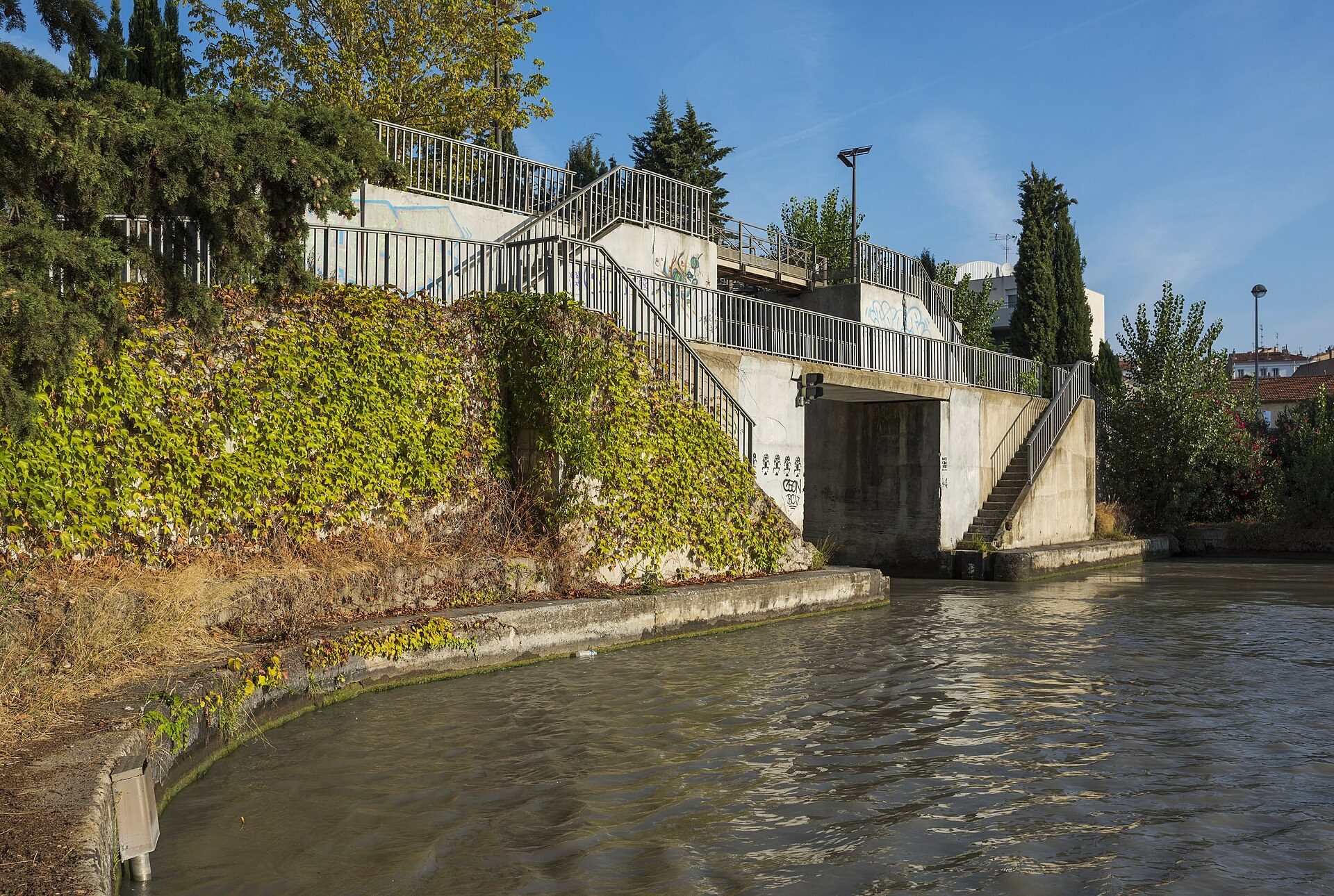
One of the most audacious engineering projects in European history began with a single obsession: to link the Atlantic to the Mediterranean without rounding the Iberian Peninsula. Pierre-Paul Riquet, a tax collector from Béziers with no formal engineering training, spent the last fifteen years of his life and much of his own fortune building the Canal du Midi. He died in 1680, just months before the canal opened. The king's ribbon-cutting, in May 1681, was attended by courtiers in silk; Riquet lay in his grave in the cathedral of Saint-Étienne in Toulouse.
The canal stretches nearly 240 kilometres from Toulouse to the Étang de Thau near Sète, where brackish lagoon water meets the Mediterranean. It was not merely a ditch. Riquet and his engineers solved a problem that had defeated their predecessors for centuries: water supply. The canal needed a constant, reliable source at its summit level near the Montagne Noire. Riquet's solution was the Saint-Ferréol dam — at the time the largest dam in Europe — which gathered the streams of the Black Mountain into a single reservoir and fed them south by a network of channels. The system was visionary enough to remain in use to this day.
02Locks, tunnels and the staircase at Béziers
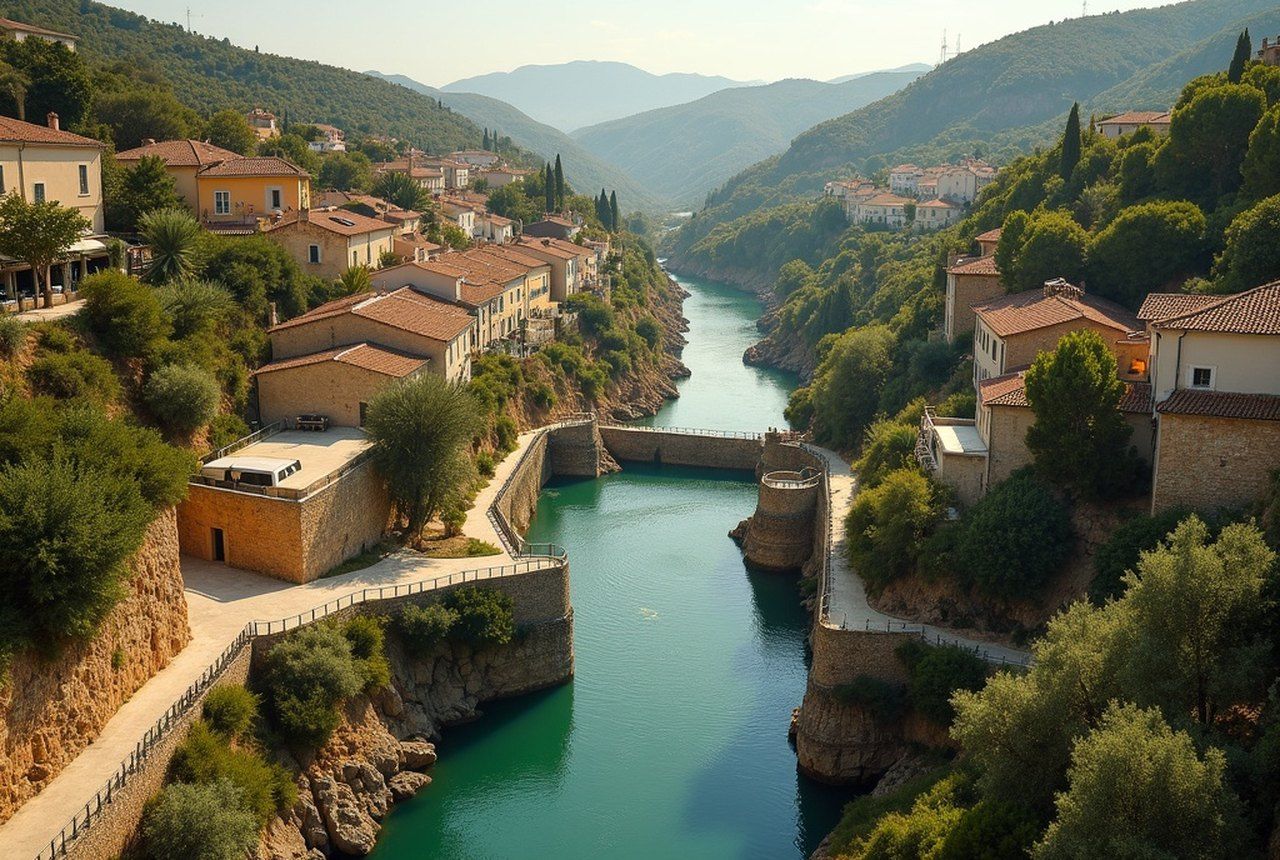
The canal descends from its summit through more than sixty locks, and nowhere is this engineering made more spectacular than at Fonseranes, just west of Béziers. Here, eight interconnected chambers form a staircase of locks dropping boats nearly twenty-one metres over a few hundred paces — a stone cascade that, seen from above, looks like an illustration from an eighteenth-century treatise on the sublime. Even today, with far fewer working barges and many more holidaymakers, the sight of a vessel inching down each chamber draws a crowd.
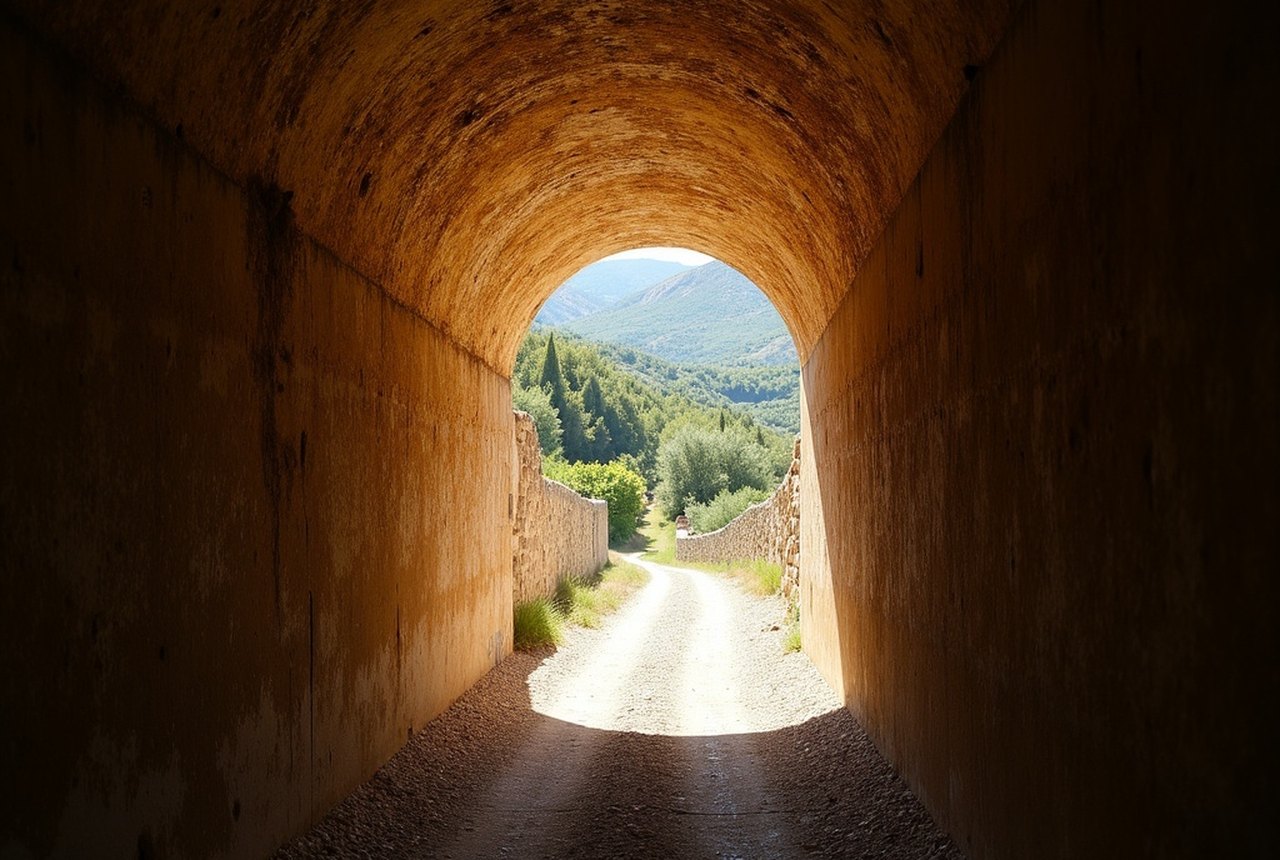
Less visited but equally remarkable is the Malpas tunnel, a short distance to the west. Completed in 1679, it is the oldest canal tunnel in the world still in use — a low, barrel-vaulted bore punched through a rocky hillside that defeated all other routes. Riquet, characteristically impatient, pressed on with the tunnel despite the doubts of sceptical royal officials. You pass through it in minutes, ducking instinctively in the dimness, and emerge blinking into the Hérault plain.
For most of its history the canal's banks were planted with an unbroken avenue of plane trees — some 42,000 of them — that arched overhead and made the waterway one of the most photographed corridors in France. They provided shade for the towpaths, reduced evaporation, and stabilised the banks. They also defined the aesthetic of the canal as UNESCO inscribed it in 1996. That inscription now carries an asterisk: a fungal disease, Ceratocystis platani, has infected thousands of trees. The Canal du Midi authority has been felling infected planes and replanting with disease-resistant species — hackberries, holm oaks, cypresses, umbrella pines — in a long, painful process of transformation. Stretches of the canal feel raw and sun-exposed in ways that would have been unrecognisable a generation ago. But the replanting is earnest, and in another generation the tunnel of green should, in new form, return.
03Life on the water
Today the canal is a leisure waterway. Hire boats — péniches and smaller cruisers — move at walking pace between Carcassonne and Agde, Castelnaudary and Marseillan, pausing at lock-side cafés and village quays. The rhythm is deliberate by design: eight kilometres an hour is the official limit, enough to protect the banks but also, as any barge sailor learns quickly, enough to recalibrate how time feels. Cyclists follow the towpath from Toulouse to the sea. Kingfishers work the reedy margins. At Homps or Le Somail, stone quays lined with narrow boats and canvas awnings look barely changed from a century-old postcard.
What has changed is the freight. The Canal du Midi carried grain, wine, cloth and salt for nearly two centuries until the railways made it redundant in the mid-nineteenth century. What Riquet imagined as the arterial route of a new commercial France became instead, almost accidentally, something rarer: a linear landscape of extraordinary beauty, moving at the pace of water, threading through the vineyards of the Minervois and the Corbières and on into the sun-flooded south.
—A short chronology
- 1665–1680Riquet oversees construction; spends his own fortune
- 1679Malpas tunnel completed, oldest canal tunnel still in use
- 1680Pierre-Paul Riquet dies, months before the canal opens
- 1681Canal du Midi officially opened
- mid-19th centuryrailways render the canal commercially redundant
- 1996UNESCO World Heritage inscription
- presentCeratocystis platani disease forces mass felling and replanting of plane trees
—People & places
Pierre-Paul Riquet (person)
Béziers-born tax collector who conceived and built the Canal du Midi
Fonseranes (place)
staircase of nine locks near Béziers dropping nearly 21 metres
Malpas tunnel (place)
oldest canal tunnel in the world still in use, bored through a hillside in 1679
Saint-Ferréol dam (place)
Riquet's reservoir in the Montagne Noire, once the largest dam in Europe
Étang de Thau (place)
brackish coastal lagoon near Sète where the canal meets the Mediterranean
Béziers (place)
historic city in Hérault, closest major town to the Fonseranes locks
Glossary
- Canal du Midi
- 17th-century canal linking Toulouse to the Mediterranean via Languedoc
- staircase of locks
- series of interconnected lock chambers raising or lowering vessels in steps
- UNESCO World Heritage site
- site officially recognised by UNESCO for outstanding cultural or natural value
- péniches
- flat-bottomed canal barges, traditional freight vessels now used for leisure
- garrigue
- fragrant Mediterranean scrubland of herbs, shrubs, and wild plants