01Vines on the Edge
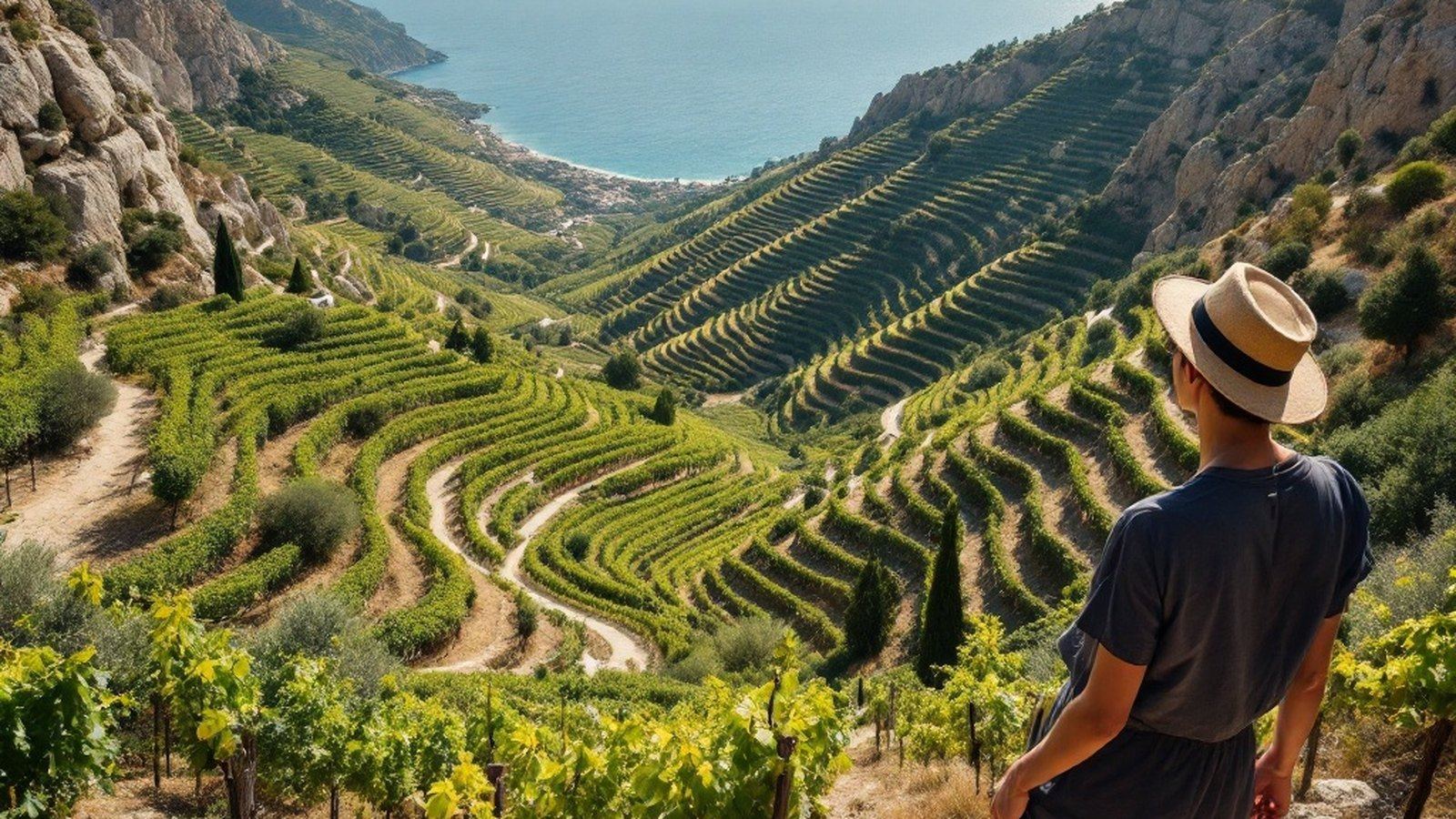
The Côte Vermeille does not ease you in gently. South of Collioure, the Pyrenees pitch straight into the Mediterranean, and every hectare of vineyard has been wrested from the schist by hand — dry-stone terraces, locally called restanques, stacked over centuries to hold soil that would otherwise wash into the sea. There are no tractors here. Growers carry tools on their backs, tend vines with hoes, and harvest into panniers. Yields are tiny. The wines, when they come, taste of the effort.
The dominant grape is grenache noir, which thrives in this wind-scoured, sun-blasted corner of Pyrénées-Orientales precisely because it is almost indestructible. From these old vines comes Banyuls, the great vin doux naturel of the coast — the grapes partially fermented, then arrested with the addition of grape spirit, locking in natural sugars and concentrating the dark-fruited richness the schist seems to press into the berries.
02Rancio and the Open Air
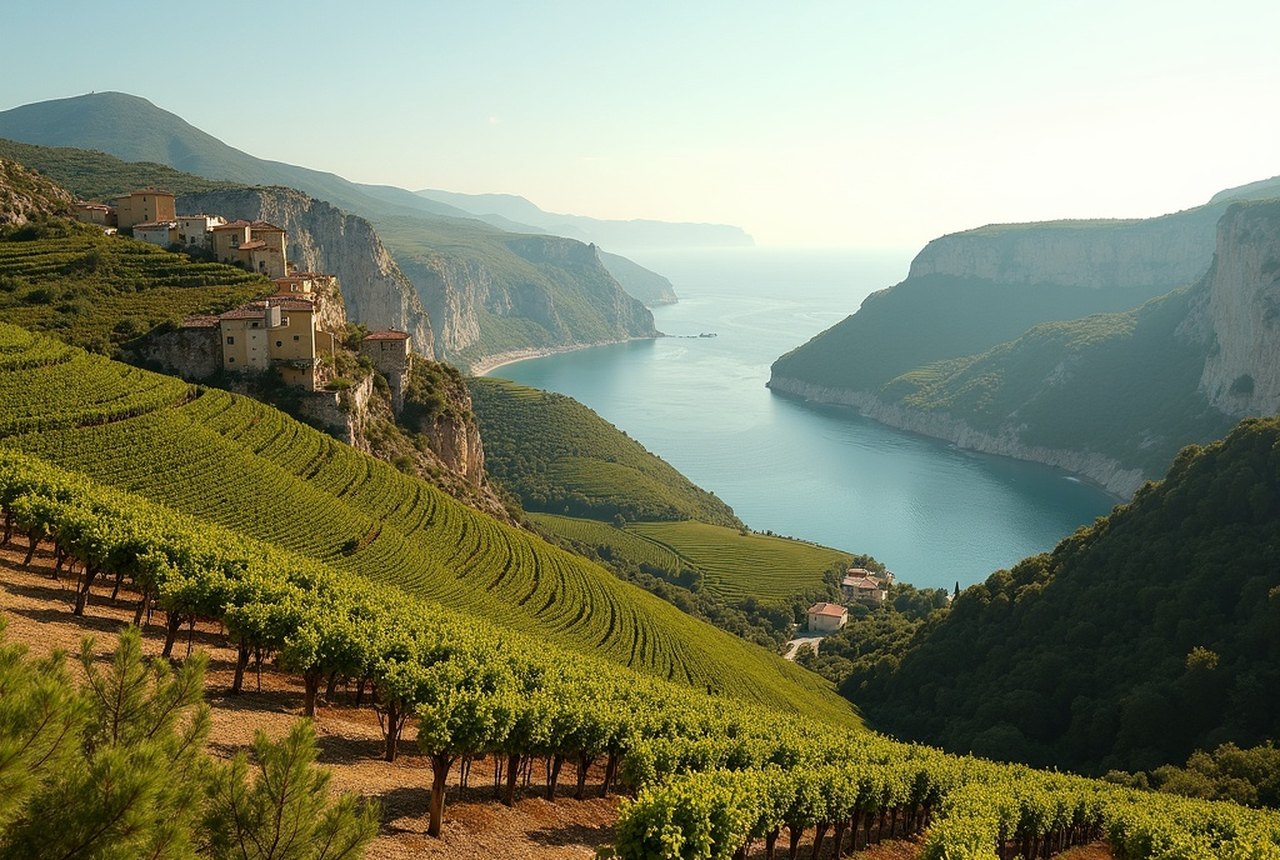
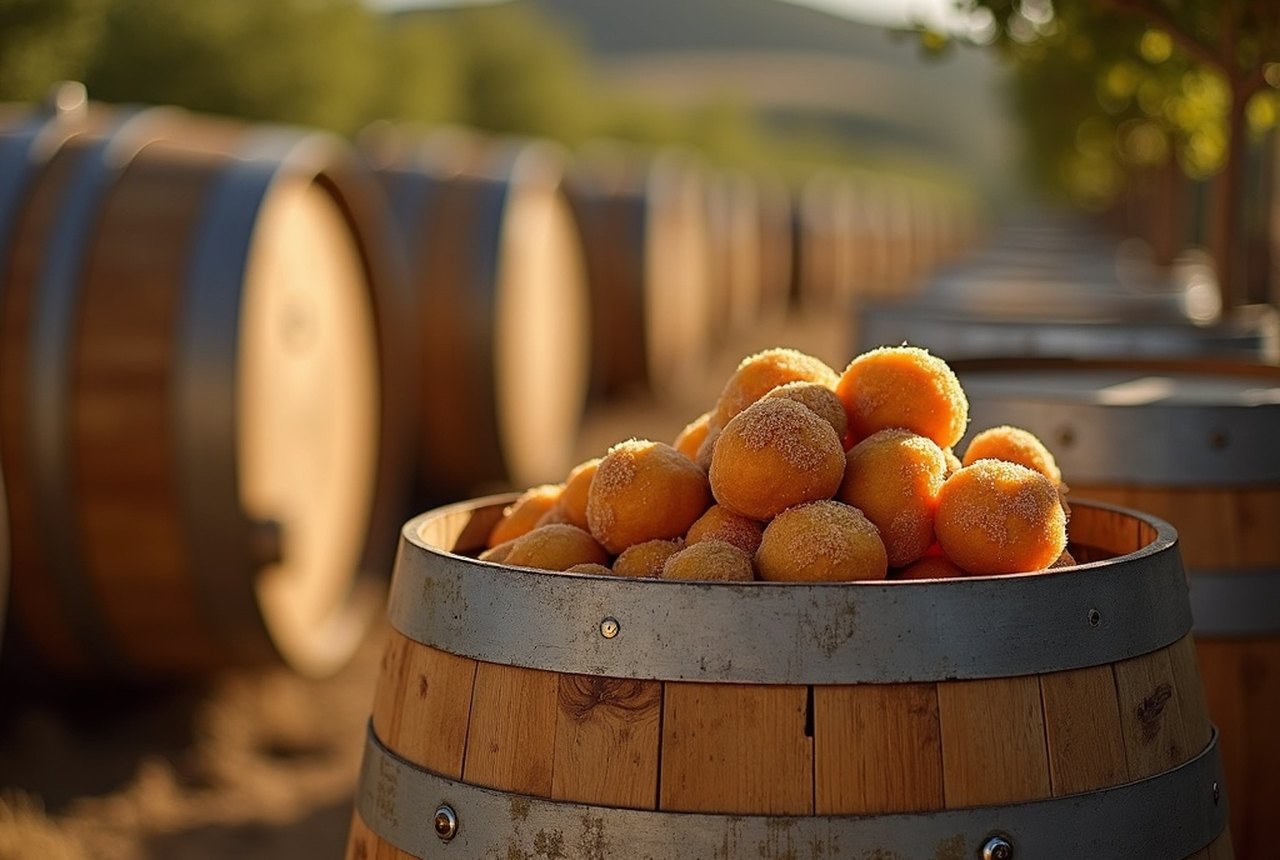
What sets Banyuls apart from other fortified wines is the deliberate exposure to heat and oxygen during ageing. Barrels or glass demijohns — bonbonnes — are left outdoors through summer and winter, baking in Mediterranean sun, chilling on winter nights. Over months or years, the wine develops what winemakers call rancio: a nutty, oxidative complexity, somewhere between dried fig, salted caramel, and old walnut, with a finish that lingers long after the glass is set down. The finest aged examples, labelled Banyuls Grand Cru, spend a minimum of thirty months in this way.
From the same steep terraces and the same grenache grapes, the appellation Collioure produces dry reds — structured, herb-inflected, unmistakably garrigue — alongside whites and rosés that have earned their own loyal following.
03What to Eat with It
The classic pairing is with chocolate — specifically dark, bitter chocolate, where Banyuls softens the tannins and mirrors the fruit. But cheese is equally rewarding: a wedge of aged Comté or a strong Roquefort alongside a glass of tawny Banyuls Grand Cru is a combination that requires very little else. The local anchovy, cured in Collioure's traditional salting houses, finds an unlikely but convincing match with a chilled, younger Banyuls served lightly cool.
Below the terraces, the marine reserve of Banyuls-sur-Mer — one of the oldest in France — protects posidonia meadows and fish nurseries in the same clear water the vines lean over. It is a reminder that the Vermilion Coast holds its treasures both above and below the tideline.
—People & places
Côte Vermeille
the "Vermilion Coast," rocky stretch south of Collioure to the Spanish border
Banyuls-sur-Mer
coastal village and appellation capital; home to one of France's oldest marine reserves
Collioure
fishing port and appellation producing dry grenache-based reds, whites, and rosés
Pyrénées-Orientales
southernmost French department, straddling Catalan culture and the Pyrenees
Glossary
- vin doux naturel
- fortified sweet wine, fermentation arrested with added grape spirit
- rancio
- nutty, oxidative character developed by ageing wine in heat and air
- restanques
- dry-stone terrace walls holding vineyard soil on steep slopes
- appellation
- official French wine classification defining geographic origin and standards
- garrigue
- fragrant Mediterranean scrubland of herbs, shrubs, and wild plants
- old vines
- mature vines (typically 30+ years) producing concentrated, complex fruit
- terroir
- the natural environment — soil, climate, terrain — shaping a wine's character