01Where stone meets sky
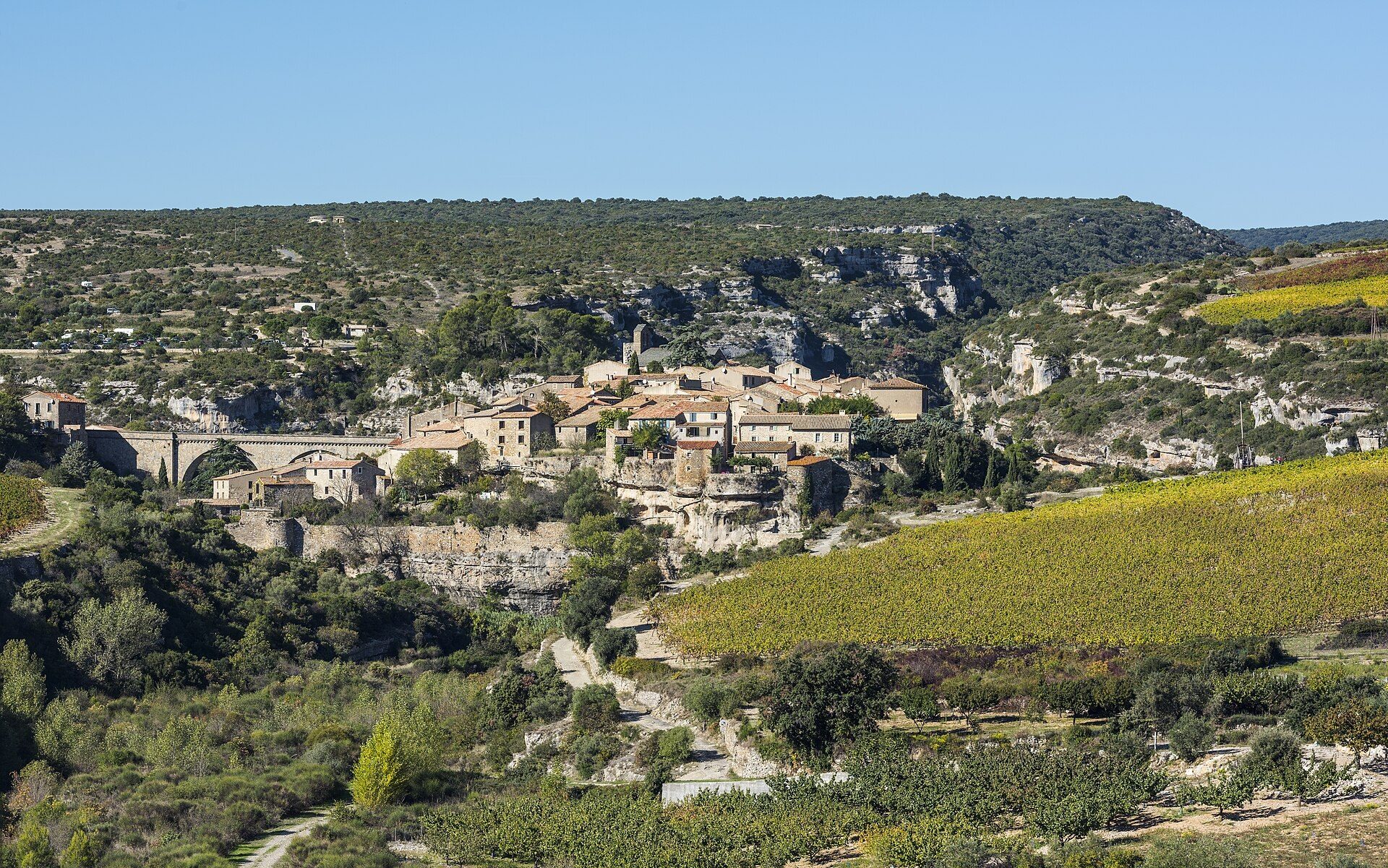
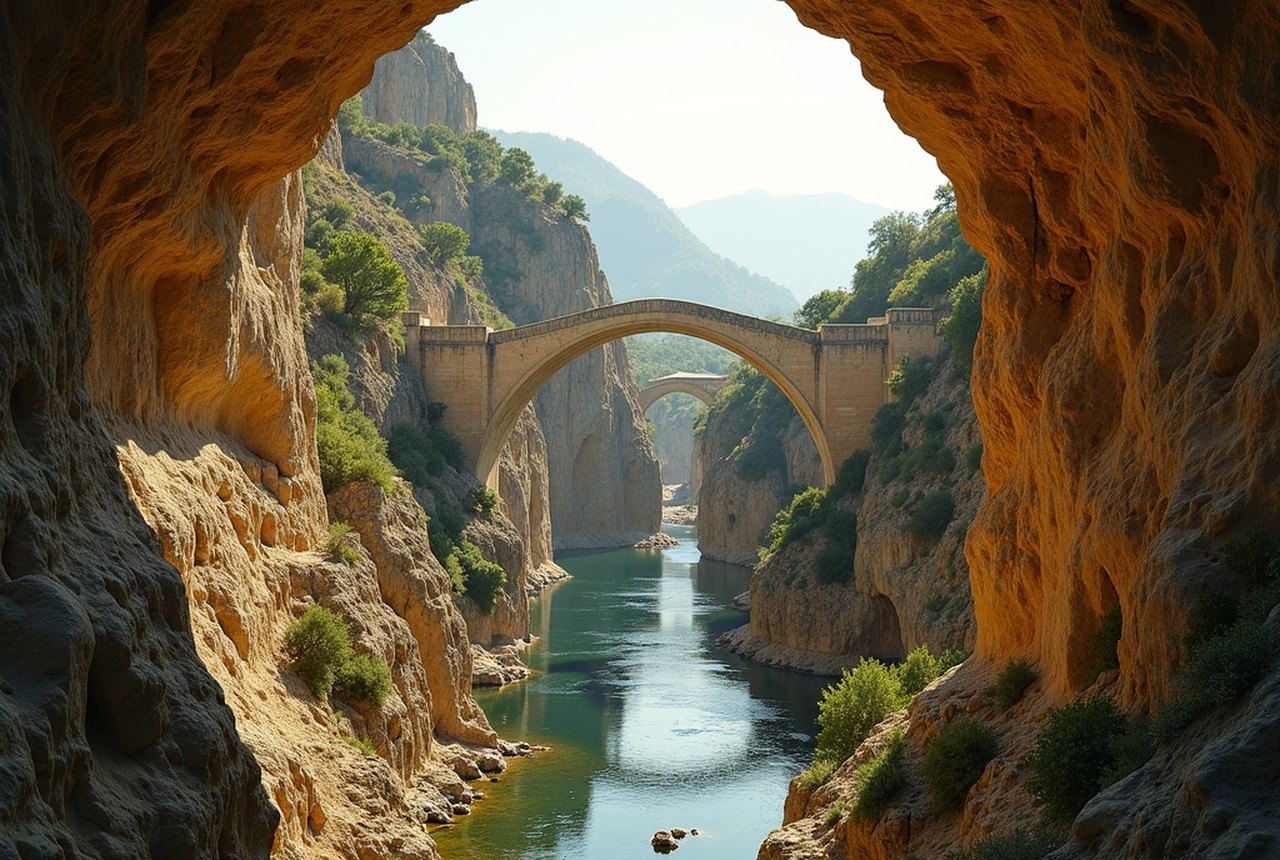
Minerve earns its reputation as one of the plus beaux villages de France the hard way: perched on a sliver of rock at the junction of the Cesse and Brian gorges, its honey-coloured houses appear to float above a landscape that belongs more to geology than to history. In summer, the garrigue — rosemary, thyme, cistus — fills the surrounding causses with a scent so dense it feels medicinal. The two rivers have done their quiet work over millennia, carving twin natural limestone bridges through the cliffs below the village; you can walk through them, emerging blinking into the gorge, the stone overhead smooth and ancient.
02The siege of 1210
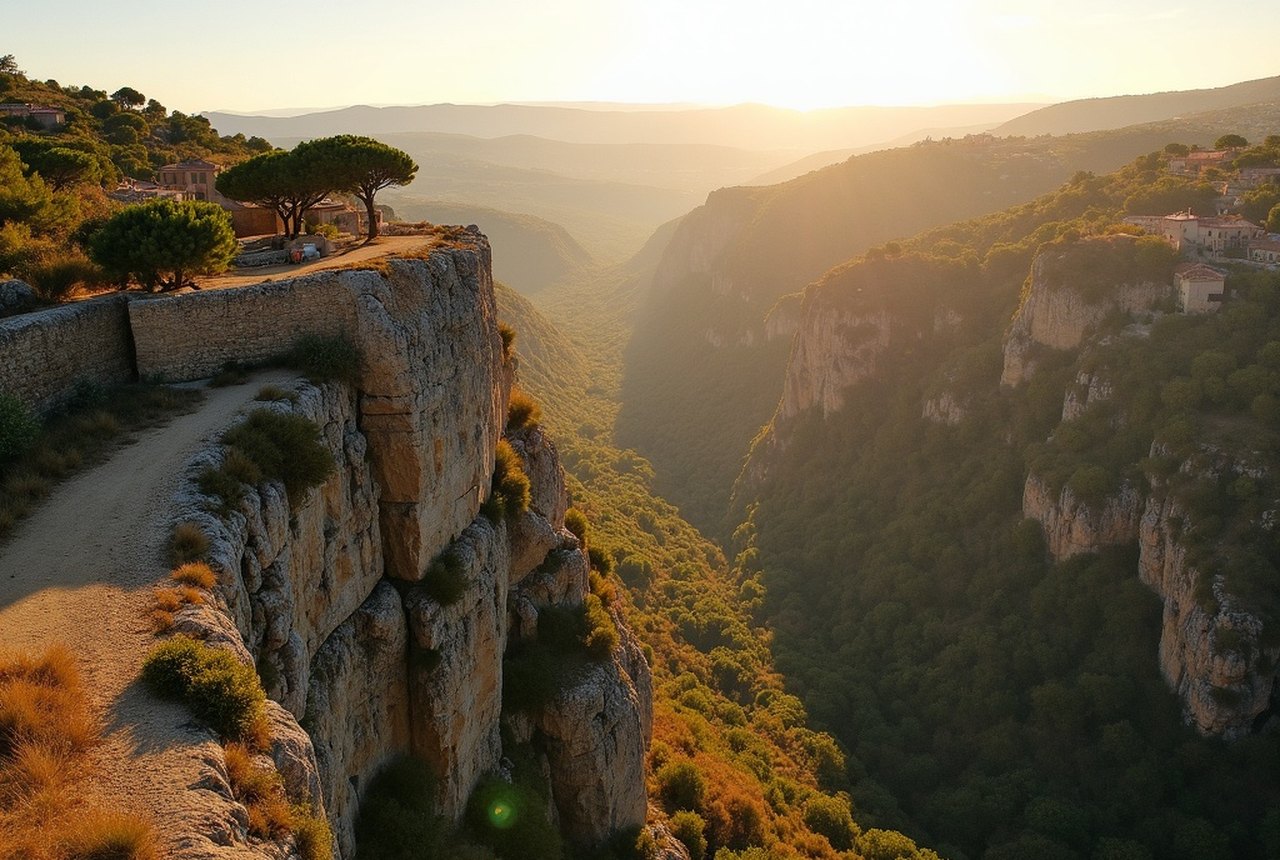
That setting, so lovely now, was once a trap. In the summer of 1210, Simon de Montfort arrived beneath these cliffs with an army on crusade — the Albigensian Crusade, launched by Pope Innocent III two years earlier to extirpate the Cathar faith from the south. Minerve was a Cathar stronghold, its natural defences formidable, but de Montfort brought a trebuchet he called la Malvoisine — Bad Neighbour — which he positioned to destroy the village's only water source. After weeks under midsummer sun, thirst forced a surrender. The garrison was spared, but the Cathar Perfects — men and women who had received the consolamentum, the Cathar sacrament — refused to recant. Around 140 were burned in a mass pyre on the plain below. A local chronicle records that some walked to the fire without waiting to be led.
03Minerve today
A full-scale reconstruction of a medieval trebuchet, also named la Malvoisine, stands at the village entrance — a sobering wooden geometry that makes the mechanics of siege warfare bracingly legible. In the village itself, a small museum traces both Cathar history and the prehistoric past of the surrounding Minervois; the Musée Hurepel houses dioramas depicting the siege in modest but affecting detail. The lanes are narrow, the gift shops honest, the views from the rock promontory across the gorges genuinely vertiginous.
Minerve sits in the heart of the Minervois wine country; the vines that drape the plateau are among the most ancient in the region, their roots working down through limestone toward water far below — not unlike the village itself, holding on by what it finds in the rock.
—A short chronology
- 1208Pope Innocent III launches the Albigensian Crusade
- 1210Simon de Montfort besieges Minerve; Cathar Perfects burned
- PresentMinerve designated one of the plus beaux villages de France
—People & places
Simon de Montfort
leader of the Albigensian Crusade military campaign
Pope Innocent III
launched the crusade against the Cathars in 1208
Minerve
fortified Cathar village on rock above Cesse and Brian gorges
Musée Hurepel
small village museum with dioramas of the 1210 siege
la Malvoisine
name of de Montfort's trebuchet; also the modern reconstruction
Glossary
- garrigue
- fragrant Mediterranean scrubland of herbs, shrubs, and wild plants
- Cathars
- medieval Christian sect in southern France rejecting Catholic doctrine
- Albigensian Crusade
- papal military campaign launched 1208 to eradicate Catharism
- plus beaux villages
- French label for officially recognised most beautiful villages
- consolamentum
- the Cathar sacrament, a spiritual baptism by laying on of hands
- trebuchet
- large medieval siege engine using a counterweight to hurl projectiles