01The colour laboratory
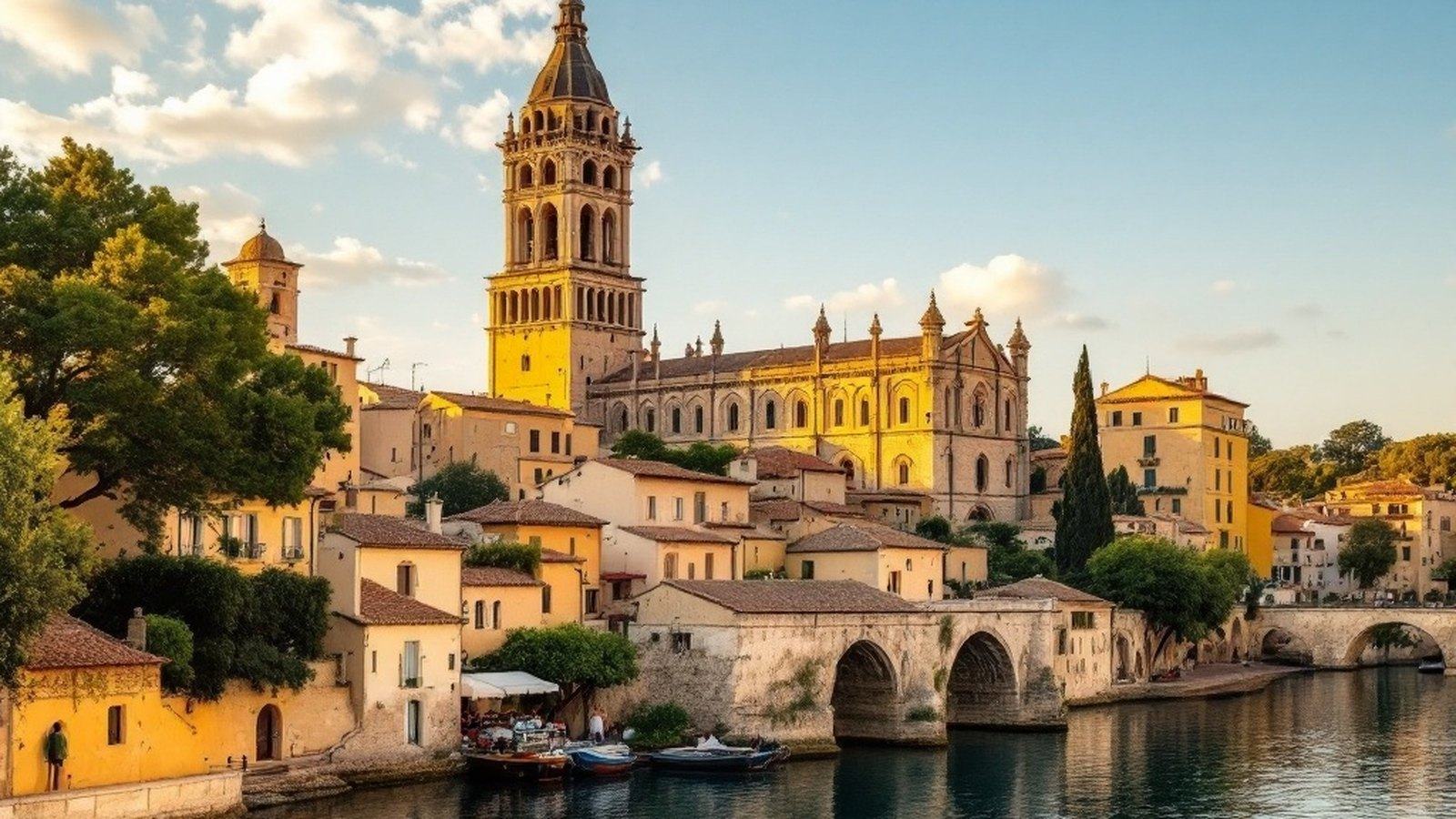
There is a moment, arriving in Collioure, when you understand why two young painters put down their brushes in 1905 and simply stared. Henri Matisse had come that summer, André Derain joined him, and what they found — the quality of light bouncing off porphyry cliffs, off water the colour of crushed lapis, off whitewashed walls and terracotta rooftiles — shattered everything they thought they knew about representation. By autumn they had made the canvases that would earn their circle the epithet fauves, wild beasts. The art world would never be quite the same.
The light is still there. Collioure sits at the foot of the Pyrenees where the last ridge of the Albères mountains tumbles into the sea, on the stretch of coastline the Catalans call the Côte Vermeille — the Vermilion Coast — for the deep rust-red of the rock. The combination of near-vertical terrain, southern latitude, and a sea breeze that scours the air of haze produces a luminosity that has no grey in it. Colours here are saturated to the point of implausibility: the blue boats, the pink and ochre facades, the vivid green of fig trees pushing out of crannies. What looked like exaggeration in a Matisse or Derain canvas was, in fact, reportage.
02Castle, bell tower, and the curve of the bay
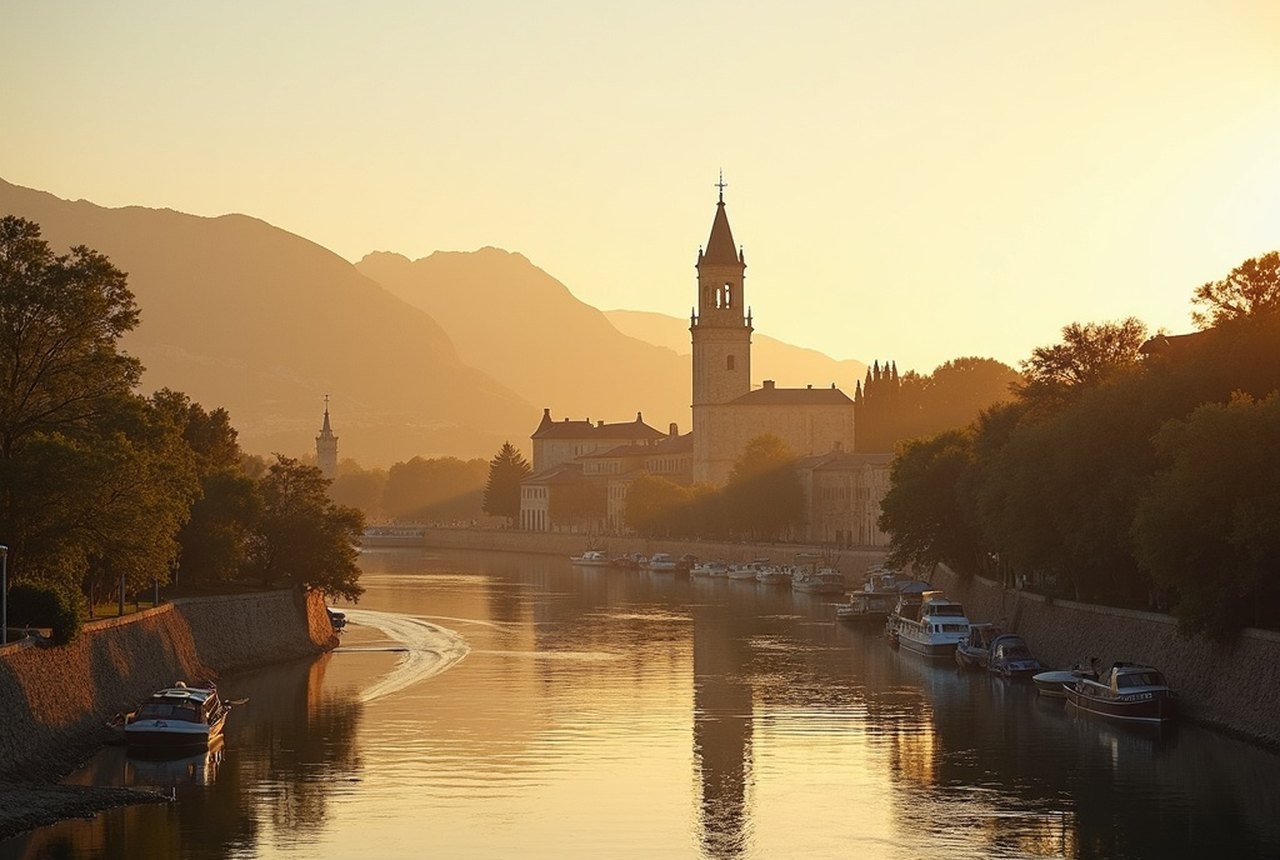
Collioure is small enough to hold in a single gaze from the right hillside, and its two great landmarks organise everything around them. The Château Royal anchors the southern end of the bay, a massively fortified pile begun by the Knights Templar in the twelfth century and expanded by successive powers — the Kings of Majorca, the Crown of Aragon, eventually the French after the Treaty of the Pyrenees ceded Roussillon in 1659. Vauban strengthened its seaward bastions in the later seventeenth century, and the result is a layered palimpsest of military architecture that also doubles, on its terraced upper levels, as one of the finest viewpoints on the coast.
Out on the jetty that divides the two small beaches stands the church of Notre-Dame-des-Anges, and its round bell tower rising straight from the water — so close to the sea that spray wets its base in heavy weather — is perhaps the most reproduced image in all of Languedoc-Roussillon. The tower was originally a lighthouse; the lantern was simply repurposed when the church was rebuilt in the seventeenth century. Inside, a sequence of gilded baroque altarpieces attributed to the Catalan sculptor Joseph Sunyer blazes in the dimness, almost operatically exuberant against plain stone walls.
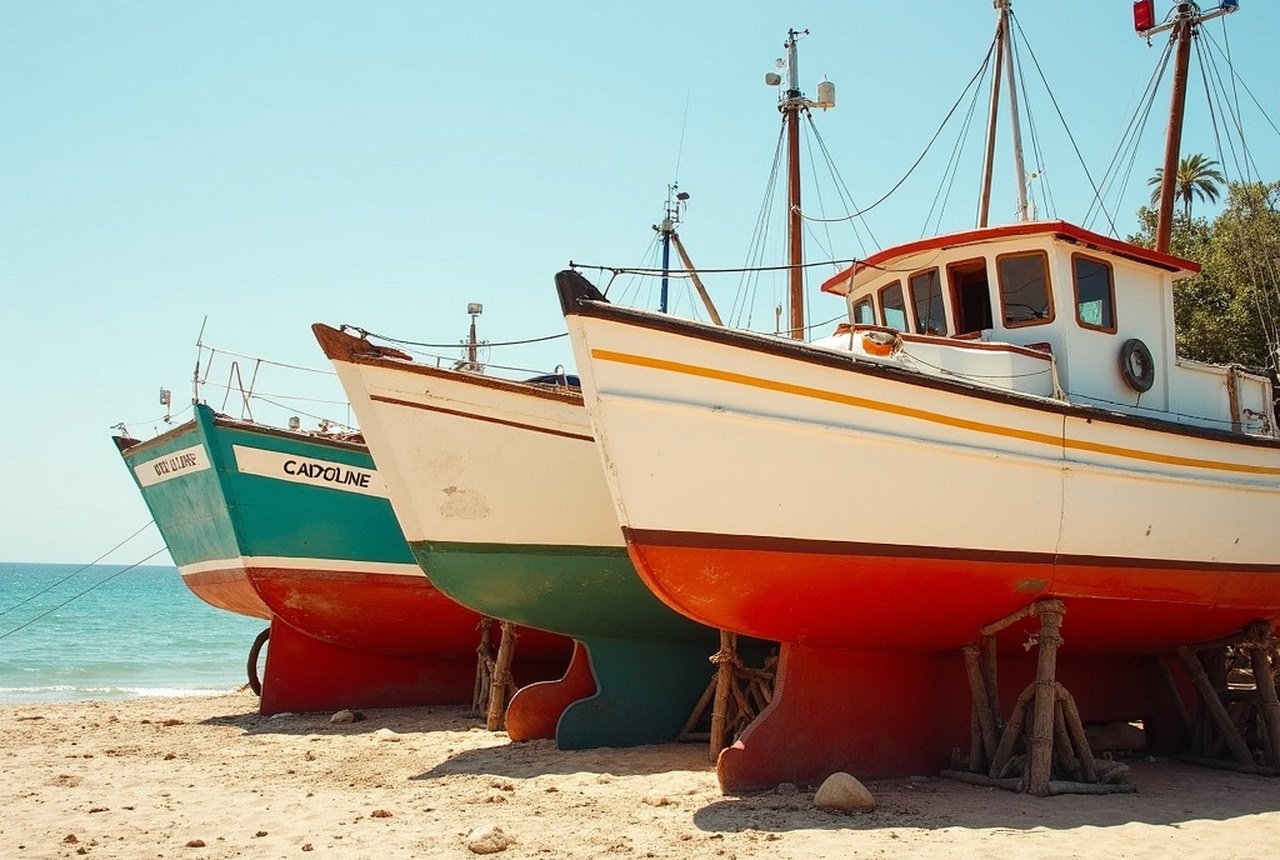
Between castle and church, the old quarter — the Mouré — climbs the hillside in a tangle of stepped alleys, painted shutters, and the smell of salt and rosemary. The harbourfront is lined with the low wooden hulls of barques catalanes, the traditional lateen-sailed fishing boats whose hulls were once painted in blues, greens, and the distinctive minium-red of the Roussillon shore. Working boats are rarer now, but several are maintained as heritage craft and hauled out on the beach during festivals, their colours as vivid as anything in a Fauvist canvas.
03The anchovy coast
Collioure's other enduring art form is the anchovy. The town has salted and cured anchovies — anchois de Collioure — since at least the fourteenth century, the silvery fish caught in summer, packed in coarse salt, matured for months until the flesh turns deep garnet and the flavour concentrates to something dense, marine, and faintly sweet. A handful of maisons d'anchois still cure fish in the traditional way, selling them whole in salt or filleted in oil, and a single tin opens up the whole history of the Mediterranean littoral — trade, preservation, the economy of the sea. They are extraordinary eaten simply: on bread, with good butter, with nothing at all.
The painters came for the light. The light has not dimmed. Stand at dusk at the end of the Château jetty as the porphyry cliffs go from rust to violet to near-black and the church tower catches the last gold of the evening, and the sensation is precisely what Matisse was chasing: colour so insistent it feels like an argument.
—A short chronology
- 12th centuryKnights Templar begin construction of the Château Royal
- 14th centuryanchovy salting tradition documented in Collioure
- 1659Treaty of the Pyrenees; Vauban later refortifies the château
- 1905Matisse and Derain paint in Collioure; Fauvism emerges
—People & places
Henri Matisse
French painter, co-originator of Fauvism at Collioure in 1905
André Derain
French painter, worked alongside Matisse in Collioure, 1905
Joseph Sunyer
Catalan sculptor, baroque altarpieces in Notre-Dame-des-Anges
Château Royal
massively fortified medieval castle anchoring Collioure's bay
Notre-Dame-des-Anges
17th-century church whose round tower rises from the sea
Kingdom of Majorca
medieval realm that controlled Collioure and Roussillon
Glossary
- Fauvism
- early-20th-century painting movement using bold, non-naturalistic colour
- barques catalanes
- traditional Catalan lateen-sailed fishing boats with painted hulls
- Côte Vermeille
- Roussillon's vermilion-cliffed coastline south of Perpignan
- Treaty of the Pyrenees
- 1659 treaty ceding Roussillon from Spain to France
- appellation
- official French wine classification defining geographic origin and standards