01Where Salt and Freshwater Meet
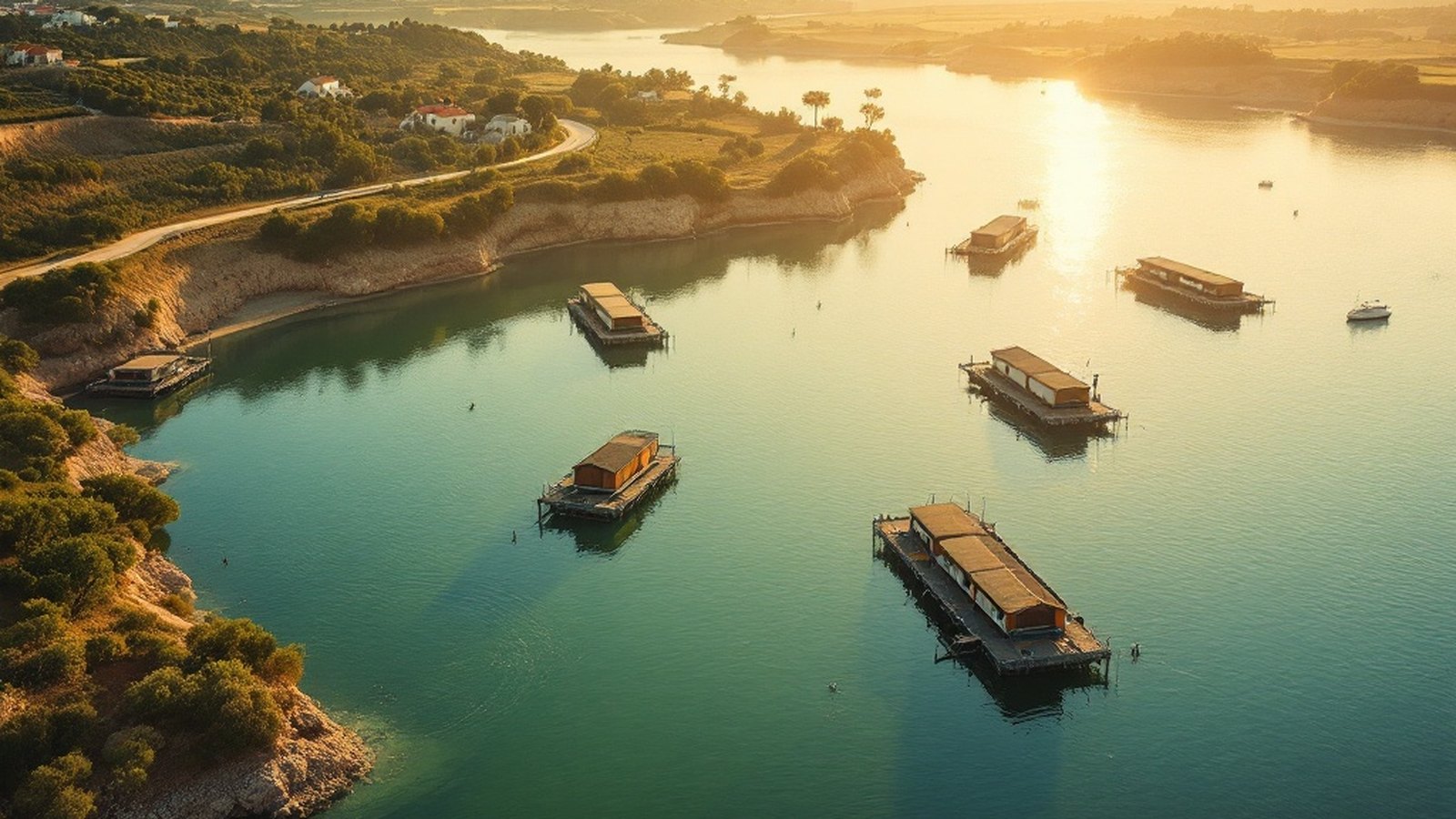
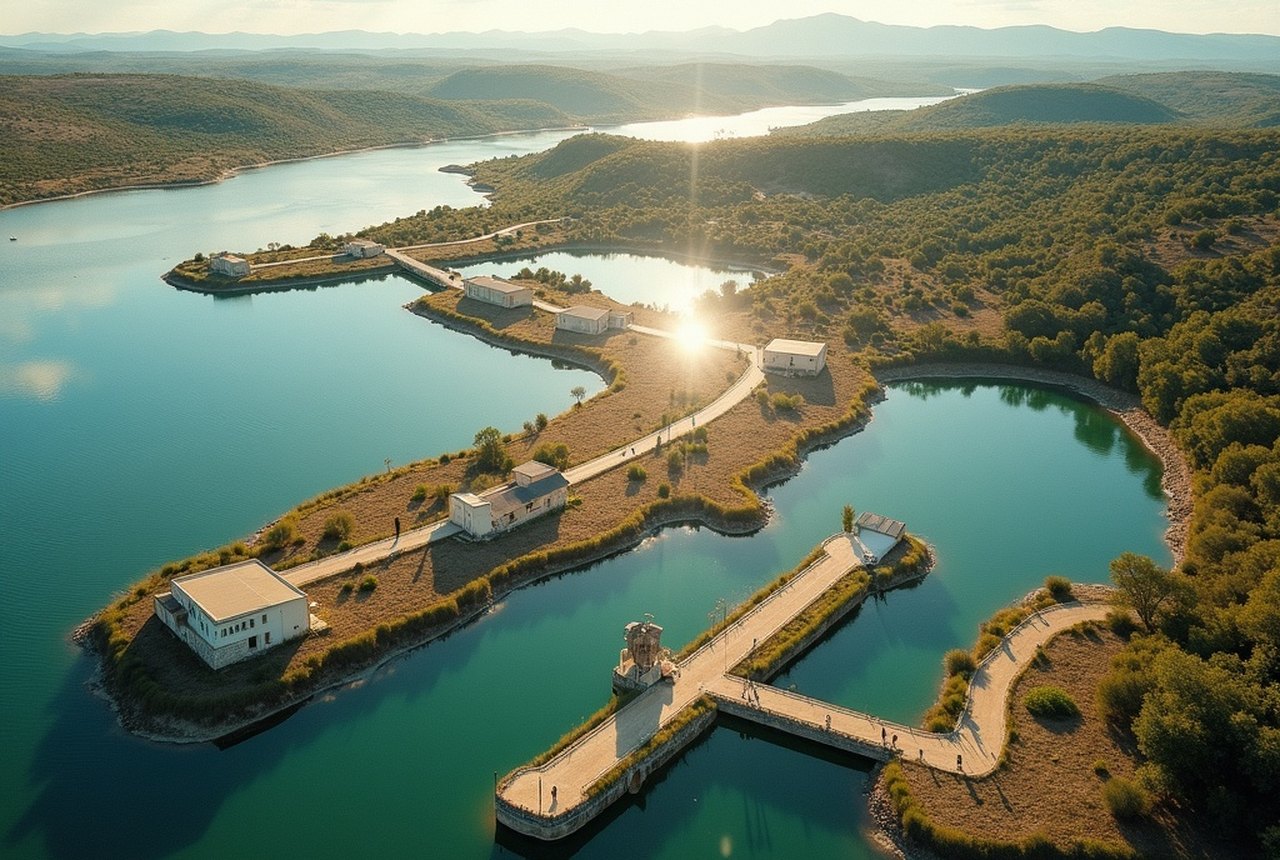
The Étang de Thau stretches for some eighteen kilometres between Sète and Agde, separated from the Mediterranean by a narrow strip of sand and connected to the sea through regulated channels. It is the largest lagoon in Languedoc — shallow, warm, and extraordinarily productive. Freshwater springs rise through the limestone bed; Mediterranean saltwater pulses in and out. The result is a brackish, mineral-rich soup that feeds shellfish with unusual speed and intensity.
Three villages — Bouzigues, Mèze, and Marseillan — line the northern shore, and it is here that the mas conchylicoles, the wooden oyster-farming platforms, cluster in dense forests across the water. Seen from the shore at dusk, their silhouettes are as much a part of the landscape as the Pic du Canigou on a clear winter horizon.
02The Huître de Bouzigues
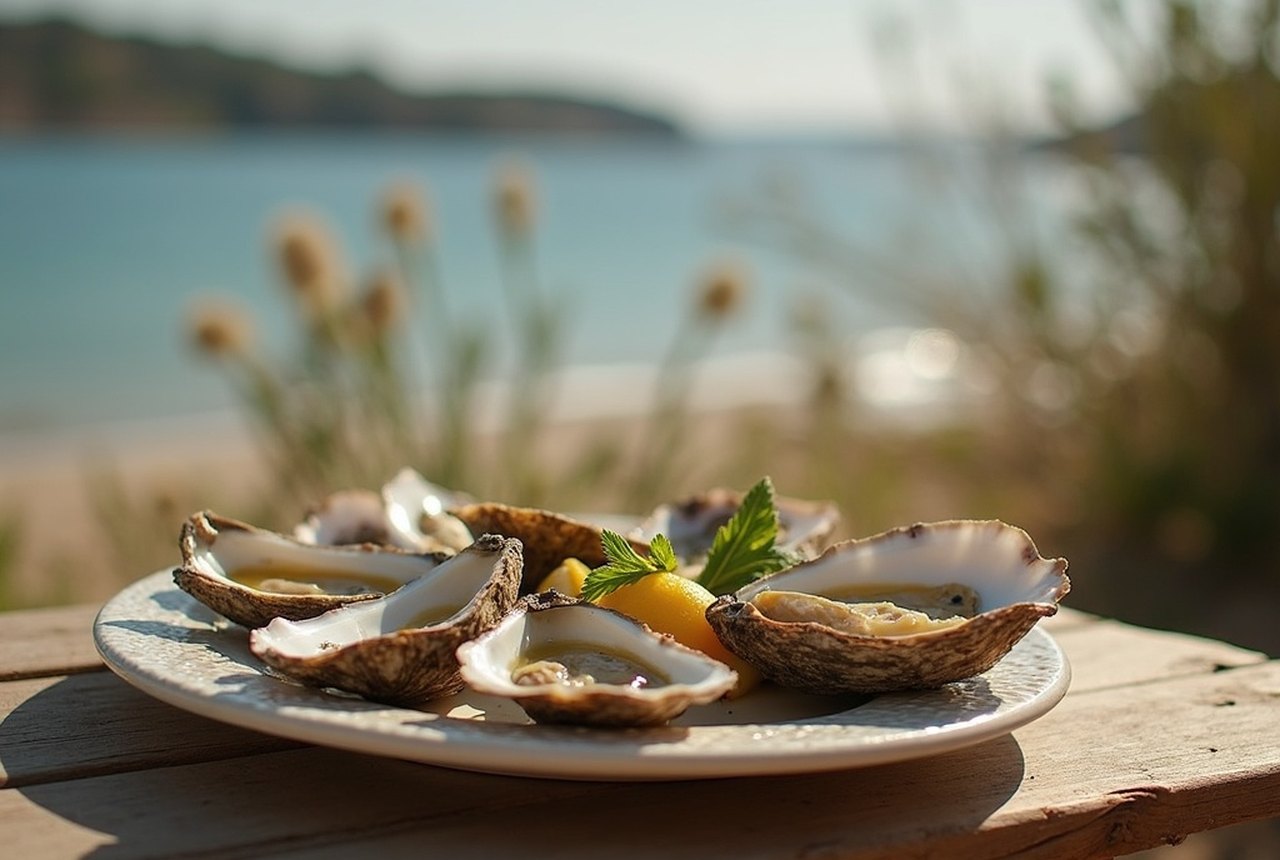
Unlike the flat huître de Bretagne, the Bouzigues oyster — a Pacific cupped variety, Crassostrea gigas — is grown suspended on ropes hanging from the surface tables rather than raked from the seabed. The warm lagoon water, rich in plankton blooms, means oysters reach market size in roughly twelve to eighteen months, about half the time required on the Atlantic coast. The flavour is distinctly Mediterranean: less iodine-briny than a Cancale oyster, more mineral, with a faint sweetness and a firm, meaty texture that holds up well to a squeeze of local lemon.
Mussels — moules de Bouzigues — share the tables, dangling from the same rope systems. Both shellfish are central to the local kitchen: eaten raw at the water's edge, or cooked simply in white wine with garlic and garrigue herbs, or folded into the fish stew bourride that Sète has made its own.
03A Lagoon Under Pressure
The Étang de Thau's productivity is also its vulnerability. Warm, nutrient-rich water can tip into algal blooms if run-off from surrounding farmland and villages is poorly managed, and periodic closures of the shellfish beds have reminded producers — and authorities — that the lagoon's generosity is conditional. Careful monitoring now governs water quality, and the farming community has learned to read the étang as a living system, not simply a harvest ground.
To eat an oyster at a trestle table beside the water in Bouzigues, opened seconds ago and tasting entirely of the lagoon behind it, is to understand what terroir means when it belongs to the sea.
—People & places
Bouzigues (village)
principal oyster-farming village on the northern shore of the Étang de Thau
Mèze (village)
shellfish village and mas conchylicoles hub, northern Thau shore
Marseillan (village)
third of the lagoon's main shellfish villages; also known for Noilly Prat
Sète (town)
port city at the eastern end of the Étang de Thau
Pic du Canigou
sacred Pyrenean peak visible on clear days from the Thau shore
Crassostrea gigas
Pacific cupped oyster species farmed in the lagoon
Glossary
- garrigue
- fragrant Mediterranean scrubland of herbs, shrubs, and wild plants
- bourride
- rich Sète fish stew emulsified with aioli garlic mayonnaise
- terroir
- the natural environment shaping a wine's or food's character
- mas conchylicoles
- oyster and mussel farming platforms on the lagoon
- huître
- French word for oyster