01France's most rugged appellation rewards those willing to look
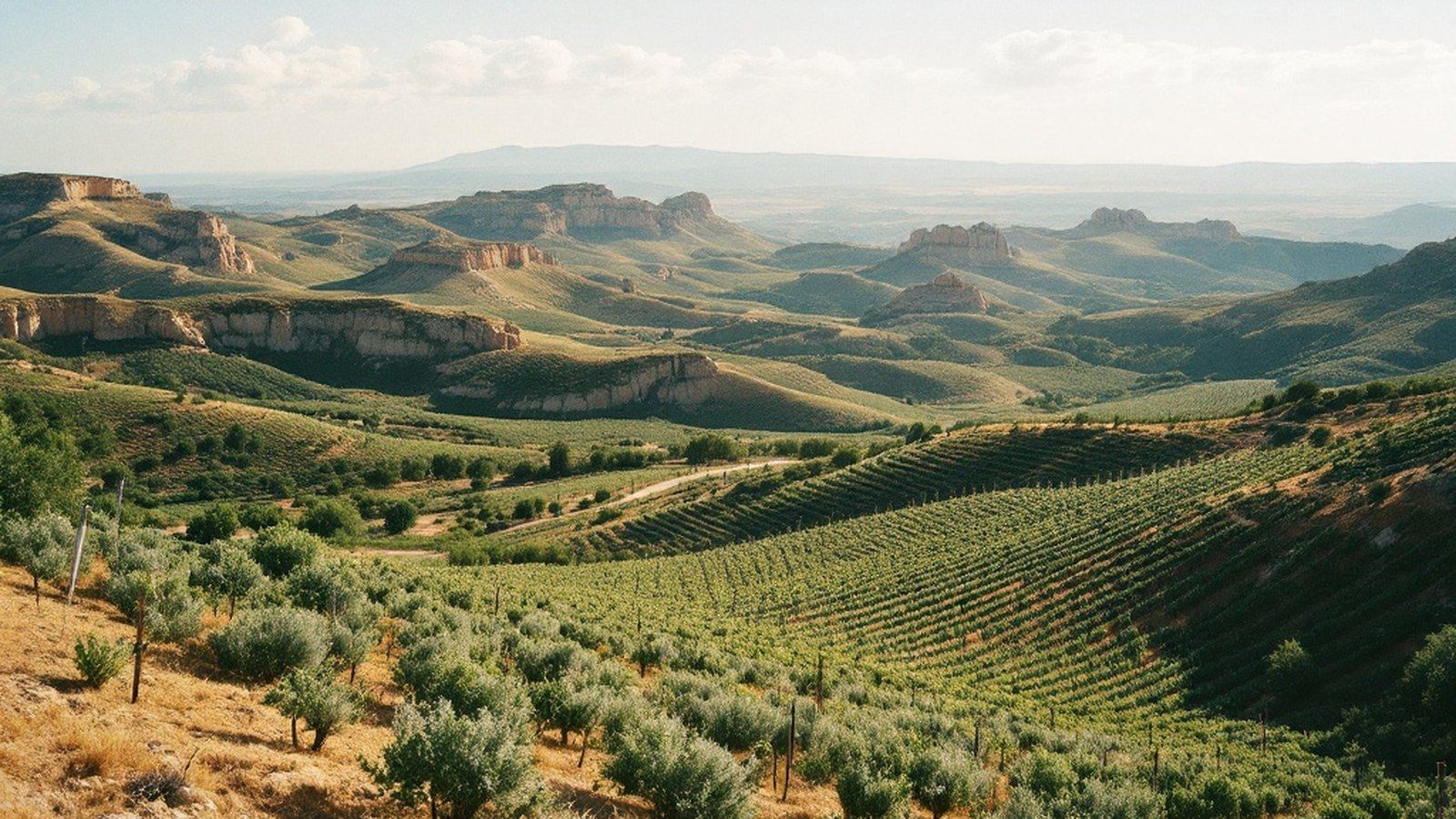
Few wine regions in France announce themselves so dramatically. The Corbières massif rises between Carcassonne and the coastal lagoons in a tangle of limestone ridges, schist slopes and garrigue so dense with wild thyme and rosemary that the air itself seems alcoholic. This is the largest appellation in Languedoc — some 13,000 hectares under vine — and for most of the twentieth century it was France's workhorse, flooding the country with cheap red. That story has changed. What hasn't is the landscape: austere, sun-baked, swept by the Tramontane, and quietly magnificent.
02Terroir: schist, limestone and the Tramontane
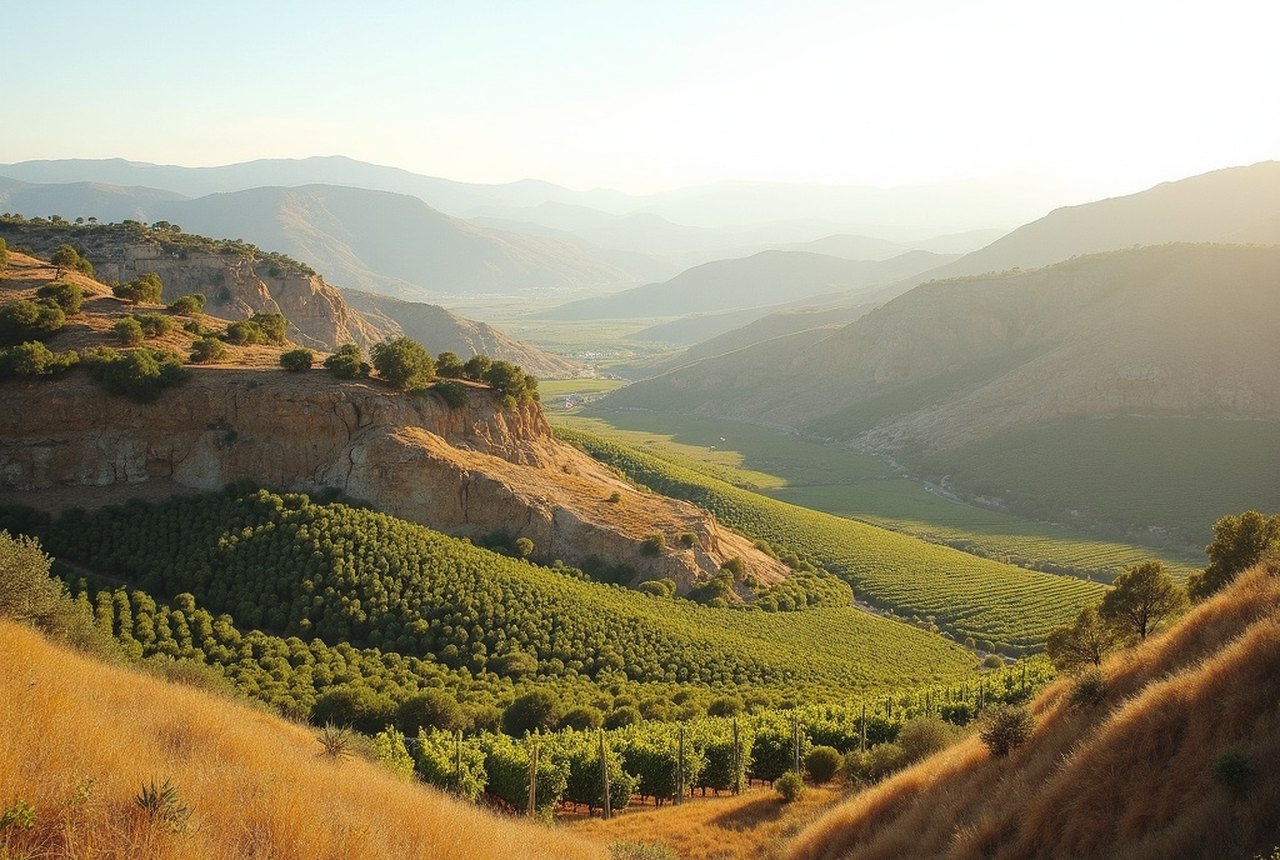
The Corbières is not one territory but many. The appellation stretches roughly forty kilometres from east to west and fifty from north to south, crossing at least a dozen distinct geological subzones that winemakers have long argued — and are gradually formalising — into named terroirs. The western hills around Lagrasse sit on limestone and clay, producing wines with structure and freshness. Further east, towards the coast, soils shift to dark schist and sandstone; vines here face a pitiless combination of heat and the desiccating Tramontane wind, which strips moisture from leaves and concentrates sugars relentlessly. Yields are naturally low. Grapes have to work.
The principal varieties are Carignan, Grenache and Syrah, with Mourvèdre adding further depth in the warmer eastern zones. Carignan — long dismissed as a bulk grape — is increasingly understood here as something more interesting: when grown on old vines and vinified by carbonic maceration or gentle extraction, it gives wines of real aromatic complexity and mineral length. Grenache provides the warmth; Syrah the colour and spice. White Corbières, made largely from Grenache Blanc, Bourboulenc and Marsanne, remain undersung but can be striking on the limestone soils around Boutenac.
03Lagrasse and the long view
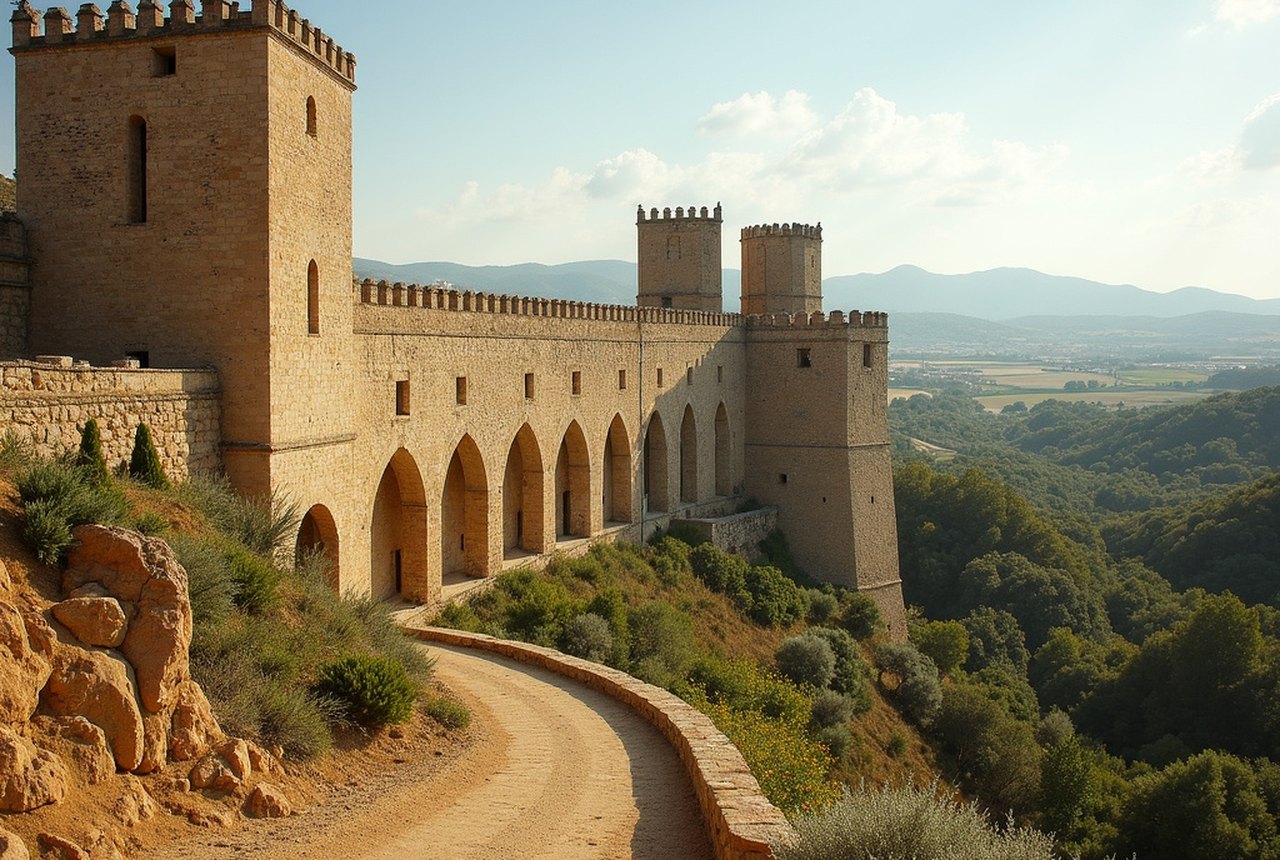
The natural anchor of the western Corbières is Lagrasse, a medieval village on the Orbieu river whose Abbaye de Saint-Marie d'Orbieu dates to the Carolingian era — founded, by tradition, in the late eighth century, and still partly occupied by a monastic community today. Its fortified form, with crenellated towers and Romanesque arcading, looks entirely at home in a landscape where every hilltop was once contested. The abbey sits at the heart of the village's old bridge and market square, and arriving here from the vine-covered garrigue, with the Tramontane sighing through the plane trees, is to understand why the monks chose this valley.
The area has never been solely agricultural. Narbonne — the Roman capital of Gallia Narbonensis — lies to the east, and the vine's presence in this part of southern France predates the abbeys by centuries. What the medieval period gave the Corbières was permanence: monastic cultivation, trade routes and a culture of quality that the post-phylloxera cooperative movement eventually buried under volume, before individual domaines began, from the 1980s onward, to dig it out again.
04Fitou and the AOC question
On the eastern edge of the appellation, wedged between coastal lagoons and the beginning of Roussillon, lies Fitou — a curiosity of wine geography and a point of local pride. Classified as an AOC in 1948, it holds the distinction of being France's first red wine appellation in the Languedoc, predating the broader Corbières AOC by over three decades. Fitou is actually two geographically separate zones: a coastal strip of schist and pebbles around the village itself, and an inland enclave in the limestone hills near Tuchan. The difference in soil type makes itself felt in the glass — the maritime zone tends to give more immediate, spice-driven wines; the inland zone adds structure and age-worthiness.
The Corbières AOC itself was granted in 1985, formalising what growers had been building toward since the 1970s: a shift from the cooperative bulk model toward smaller-scale, terroir-focused production. That shift is far from complete — cooperatives still handle a significant share of the harvest, and not always badly — but the region now has a critical mass of serious domaines producing wines that hold their own against appellations with far loftier reputations and prices.
Come here for the value, by all means. Stay for the landscape, the schist and the abbey at Lagrasse in autumn light.
—A short chronology
- late 8th centuryAbbaye de Saint-Marie d'Orbieu at Lagrasse founded (by tradition)
- 1948Fitou designated France's first red AOC in Languedoc
- 1970s–80sshift begins from cooperative bulk production toward quality domaines
- 1985Corbières granted AOC status
—People & places
Corbières
rugged massif and France's largest Languedoc appellation, between Carcassonne and the sea
Abbaye de Saint-Marie d'Orbieu, Lagrasse
Carolingian-era abbey, partly still occupied, in western Corbières
Lagrasse
medieval village on the Orbieu river, heart of western Corbières wine country
Fitou
AOC village and appellation on the eastern edge of Corbières, split into coastal and inland zones
Narbonne
Roman capital of Gallia Narbonensis, to the east of the Corbières massif
Boutenac
limestone subzone within Corbières, noted for white wines and structured reds
Glossary
- appellation
- official French wine classification defining geographic origin and production standards
- garrigue
- fragrant Mediterranean scrubland of herbs, shrubs, and wild plants
- terroir
- natural environment (soil, climate, terrain) shaping a wine's character
- Carignan
- hardy red grape common in southern France, thrives in heat and old-vine conditions
- old vines
- mature vines (typically 30+ years) producing concentrated, complex fruit
- carbonic maceration
- whole-bunch fermentation technique preserving fruit and reducing tannin
- Tramontane
- cold, dry north-westerly wind dominant across the Corbières and Roussillon
- AOC
- Appellation d'Origine Contrôlée; France's controlled designation of origin for wine
- cooperative cellar
- shared winery where multiple growers pool grapes for collective production
- bulk wine
- large-volume, undifferentiated wine sold by quantity rather than quality
- domaine
- French wine-producing estate, often family-owned