01The scent of the south, written in scrub and stone
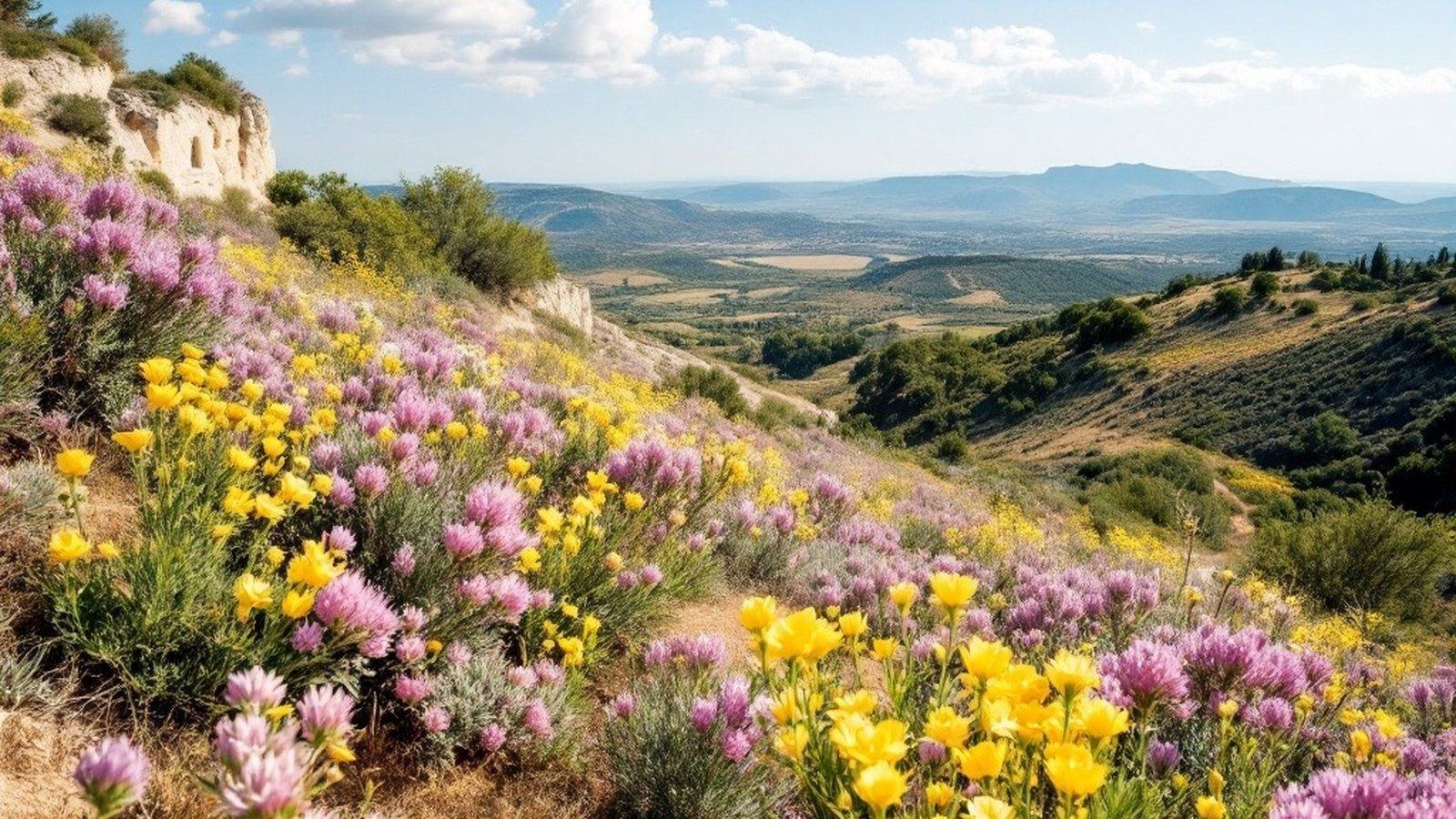
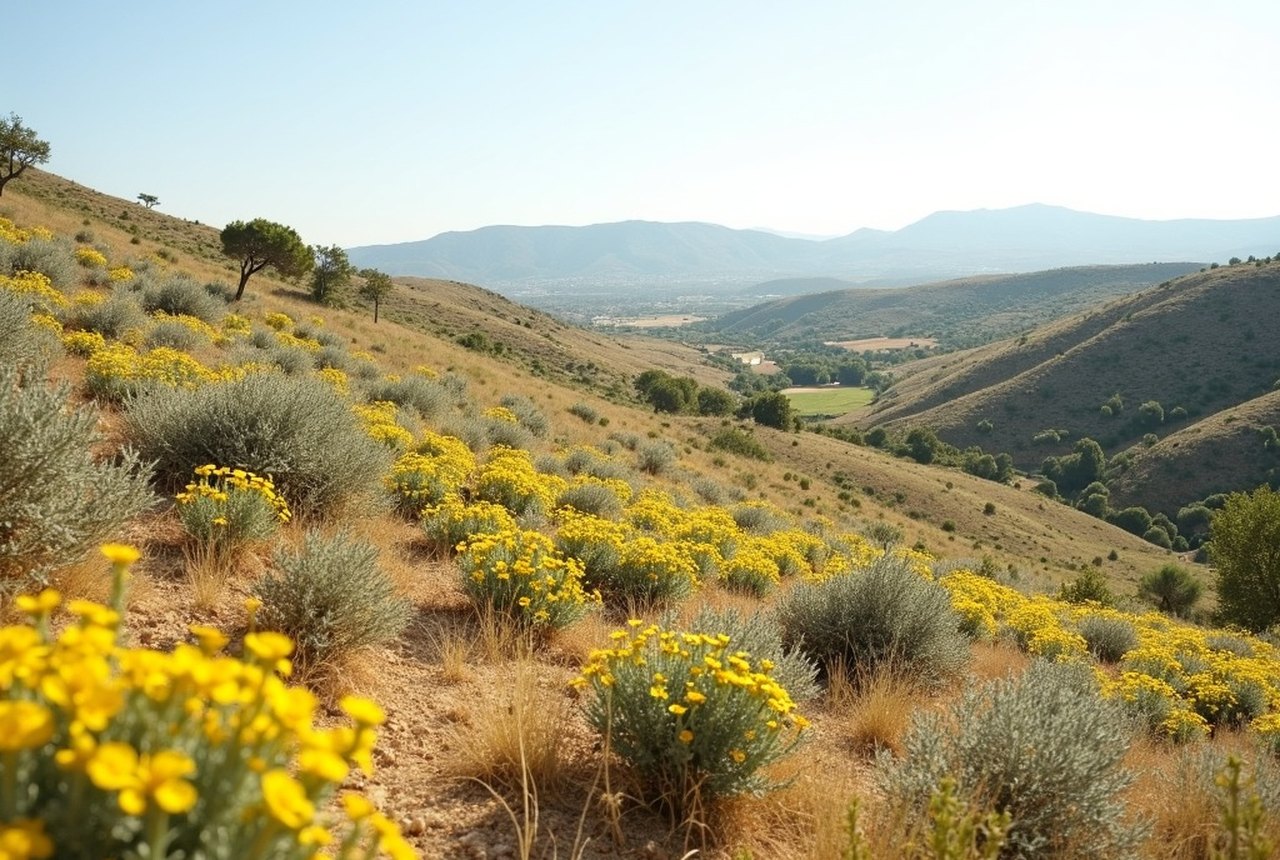
Step off any lane between Nîmes and Narbonne in high summer and the air hits you before the view does — a dense, resinous perfume of thyme, rosemary and wild sage baked hard by a sun that shows no mercy. This is the garrigue: the low, aromatic scrubland that colonises the limestone plateaux and hillsides of Languedoc wherever the vine and the plough have not reached, and in many places where they once did and were eventually defeated.
The dominant plants are survivors by design. Kermes oak crouches dense and spiny, its waxy leaves a textbook in drought resistance. Cistus species — rock roses — spread in wide mats, white and pink flowers brilliant for a few weeks in May before the heat closes in. Wild fennel sends tall, feathery stems above the general tangle, and everywhere beneath your feet the thyme and rosemary release their oils at the lightest footfall. These are sclerophyll plants, tough-leaved and deep-rooted, adapted to thin soils and four parched months of summer.
Spring softens all of this. Before the heat consolidates, the garrigue fills quietly with wild orchids — bee orchids, pyramidal orchids, the violet bird's-nest among the leaf litter — dotting the stony clearings with an improbable delicacy. Then, as May tips into June, the cicadas begin. By July their collective singing is a physical presence, a wall of sound that is one of the most characteristic sensory facts of the Midi, as defining as the light itself.
Birds of prey quarter the open ground: short-toed snake eagles hunt above the scrub in summer, and the patient observer will find Montagu's harriers drifting low over the rougher stretches of the Corbières or the garrigues north of Montpellier.
The garrigue's influence reaches the table and the glass. Winemakers across Languedoc speak of its scent carried into the wine — not metaphor but microbial reality, the wild herbs of the hillside shaping the aromatic character of Carignan and Grenache grown in soils just metres away. In the kitchen, garrigue thyme finds its way into daubes and grillades with no ceremony at all; it is simply there, growing wild at the field's edge, free for the cutting.
To walk in the garrigue in early morning, before the heat silences everything but the insects, is to understand something essential about why this landscape makes the food and wine it does — spare, aromatic, unimprovable.
—People & places
Corbières
rugged wine and garrigue country between Narbonne and Carcassonne
Nîmes
Roman city marking the northeastern limit of the garrigue zone
Narbonne
Roman-founded city near the garrigue's southern extent
Glossary
- garrigue
- fragrant Mediterranean scrubland of herbs, shrubs, and wild plants
- sclerophyll
- woody plant with small, waxy leaves adapted to drought
- Carignan
- hardy red grape variety common in southern France, thrives in heat
- terroir
- the natural environment — soil, climate, terrain — shaping a wine's character