01The island city that earns its nicknames
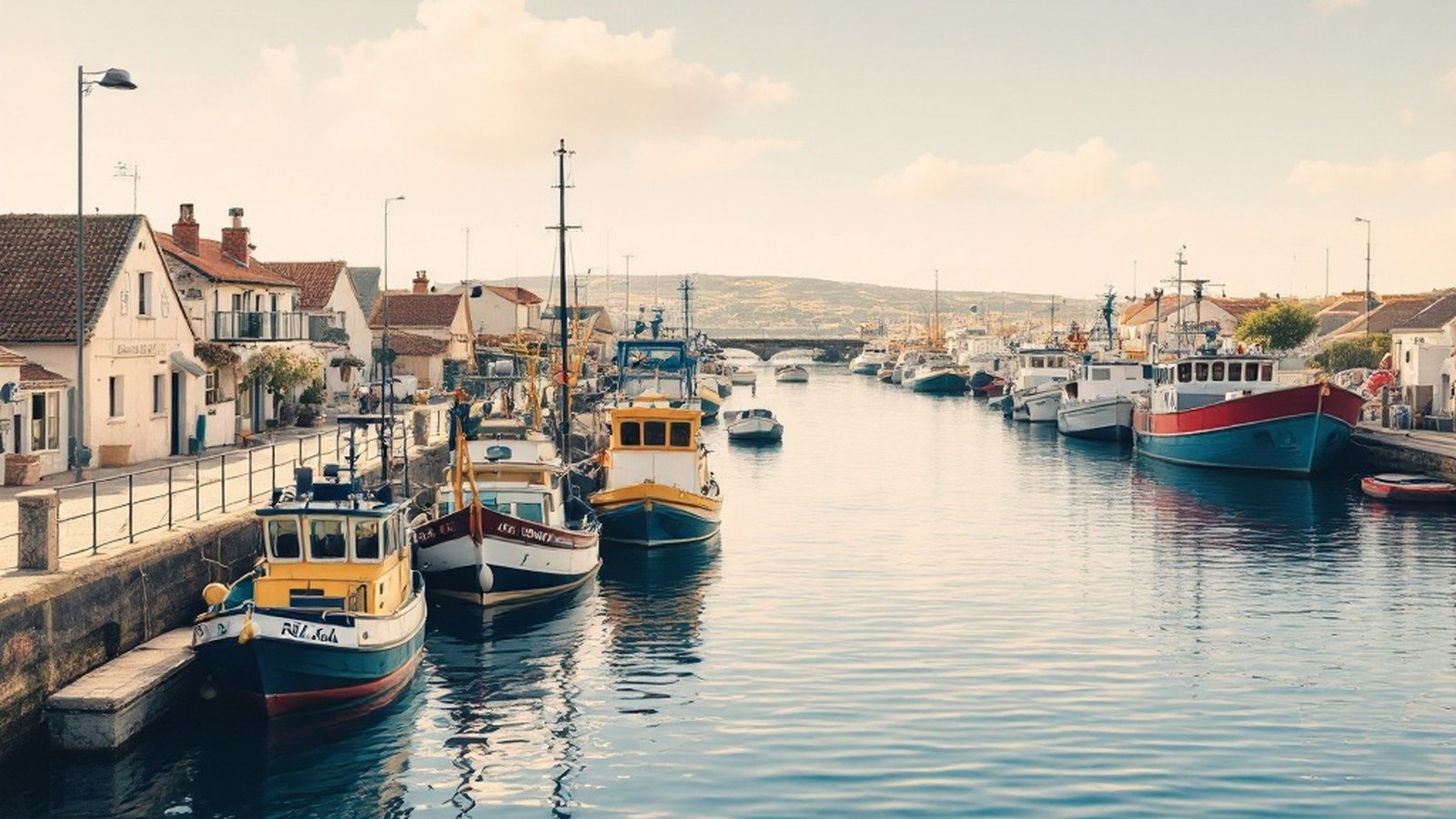
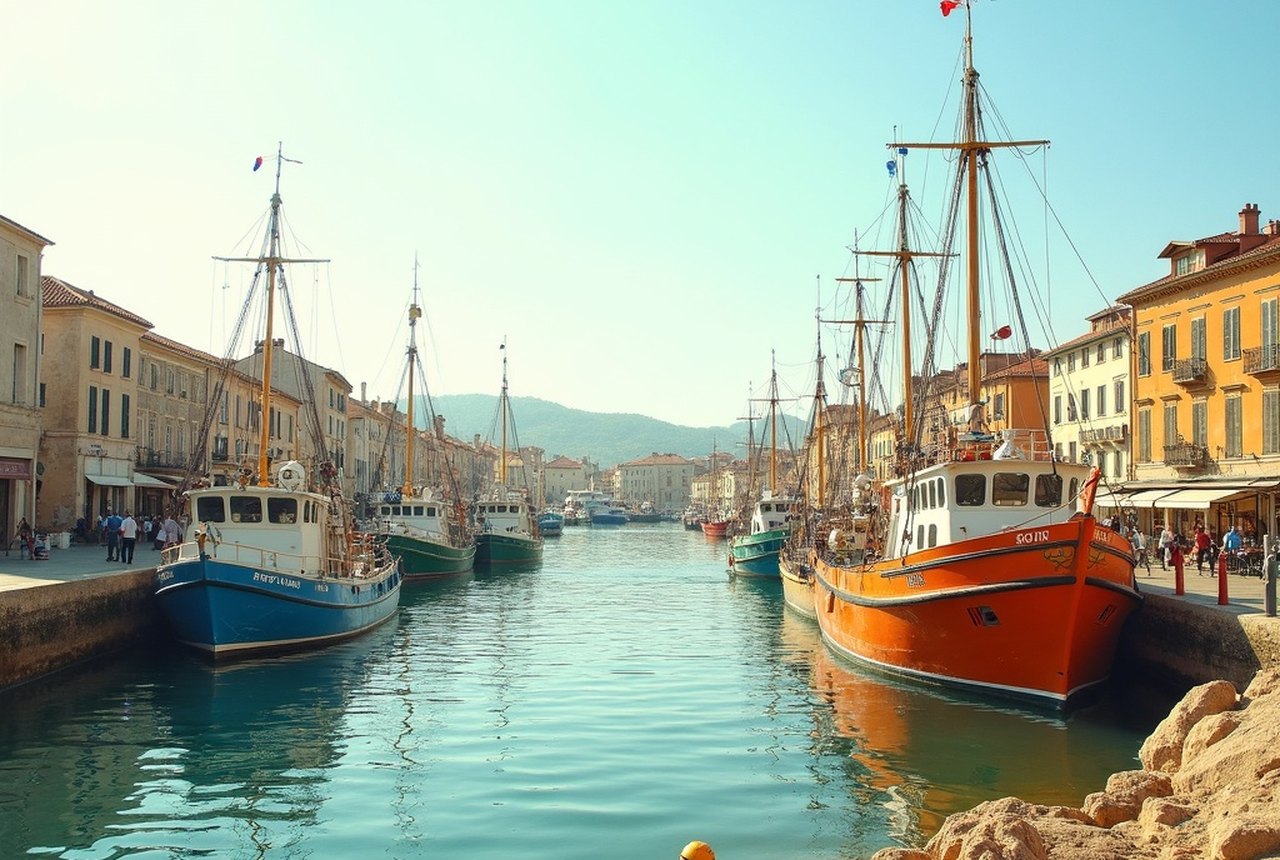
Rising from a narrow spit of land between the Étang de Thau and the Mediterranean, Sète is built around and up the flanks of Mont Saint-Clair — a genuine hill town that happens to be half-submerged in canals. The Venise du Languedoc label is easy to dismiss, then surprisingly hard to shake: the old fishing quarter, the Grand Canal, the water-facing quays stacked with trawlers and pleasure boats, the smell of salt and diesel — it works.
The canals are not decorative. Sète was built as a port in the seventeenth century, the seaward terminus of the Canal du Midi, and the water still moves purposefully through the town. The quays along the Canal Royal are lined with seafood restaurants where the catch arrives by boat rather than lorry. Order tielle — a peppery, tomato-and-octopus filled pastry pie that belongs to Sète and nowhere else — or a bowl of bourride, the local fish stew thickened and emulsified with aioli until it glows gold.
Each August, those same canals become an arena. The joutes nautiques of the Cadre Royal are water jousting — two lancers balanced on platforms at the sterns of rival boats, each attempting to knock the other into the water while oarsmen row and a band plays. The tradition is centuries old, the rivalries between Sète's old quartiers are genuine, and the crowds that pack the canal banks take the results seriously. It is one of the most theatrical popular festivals in the south.
The town also carries an outsized literary and musical weight. Paul Valéry, whose Le Cimetière marin is one of the great poems of the twentieth century, was born in Sète and is buried on the hillside in the very cemetery his poem contemplates — the Cimetière Saint-Charles, its white tombs tilted above the sea. The museum bearing his name sits at the foot of Mont Saint-Clair. Across town, in the Cimetière Le Py, lies Georges Brassens, the singer-songwriter who grew up in Sète and threaded its streets and characters into his work across a career of about thirty years. Both graves draw pilgrims who come not for the spectacle but for something quieter — the knowledge that a place was loved well enough to be stayed in, written about, and returned to at the end.
—People & places
Paul Valéry
French poet, born Sète; buried in Cimetière Saint-Charles
Georges Brassens
French singer-songwriter, raised in Sète; buried in Cimetière Le Py
Mont Saint-Clair
hill dominating Sète, rising from the narrow coastal spit
Étang de Thau
large lagoon west of Sète, separating it from the mainland
Cadre Royal
the main canal stretch where formal joutes nautiques are held
Glossary
- joutes nautiques
- traditional boat jousting tournaments popular in Sète and Palavas
- bourride
- rich Sète fish stew emulsified with aioli garlic mayonnaise
- Canal du Midi
- seventeenth-century canal linking Atlantic to Mediterranean